

Umayyad Palace
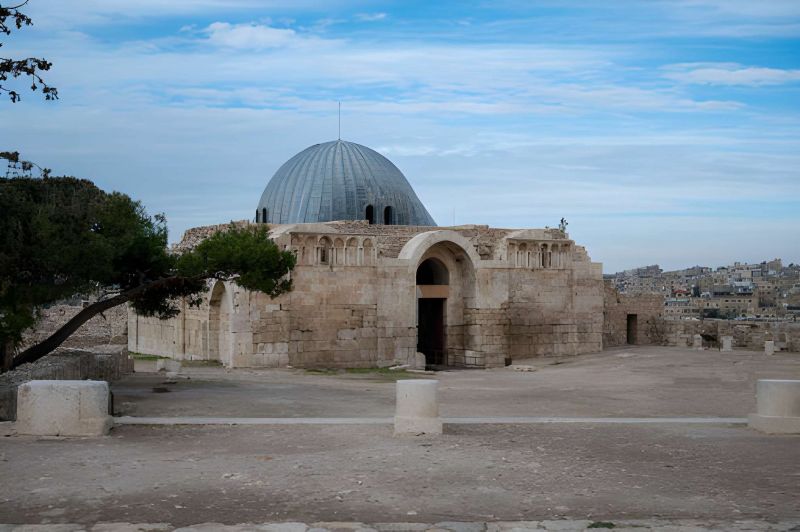
Umayyad Palace in Amman – The Timeless Gem of the Islamic Golden Age
Perched majestically atop the Amman Citadel, the Umayyad Palace stands as one of Jordan’s most captivating monuments, reflecting the architectural brilliance of the early Islamic era. Built during the 8th century, this palace is a surviving testimony to the Umayyad dynasty’s grandeur and their distinctive approach to art, culture, and urban development. When visitors step through its iconic domed gateway, they’re transported into a world where desert fortresses met cosmopolitan sophistication. The Umayyad Palace, often admired for its intricate stonework and unique layout, showcases how Islamic architecture evolved by incorporating Byzantine and Roman influences. Every arch, courtyard, and corridor narrates stories of rulers, artisans, and travelers who once roamed these grounds. The palace doesn’t just echo ancient footsteps—it immortalizes an age when aesthetics and functionality coexisted in perfect harmony. Today, the site continues to attract historians, architects, and curious travelers drawn by its aura of mystery and timeless beauty. Overlooking the bustling Amman City, the palace offers panoramic views that seamlessly blend Jordan’s ancient past with its vibrant present. The Umayyad Palace isn’t merely ruins—it’s an enduring emblem of cultural identity, symbolizing the roots of Islamic civilization in the heart of modern-day Jordan.
Historical Background of the Umayyad Palace
The construction of the Umayyad Palace dates back to around 720 AD, during the reign of Caliph Al-Walid I. This period marked the zenith of the Umayyad dynasty’s power, when their empire stretched from Spain to Central Asia. The palace, believed to have served as an administrative residence for regional governors, was part of a larger complex that included official buildings, courtyards, and storage facilities. Archaeologists have uncovered evidence suggesting that the site was built atop earlier Roman and Byzantine ruins, blending elements of both ancient and Islamic architecture. The palace’s strategic location atop the Amman Citadel was no coincidence—it gave rulers a commanding view of the surrounding valleys, a symbol of authority and divine oversight. Despite centuries of earthquakes and neglect, the palace’s remains still reveal the sophistication of early Islamic urban planning, where geometry, symmetry, and light played central roles in design.
Architectural Design and Layout of the Umayyad Palace
The Umayyad Palace showcases an architectural finesse that defines early Islamic construction. The layout follows a symmetrical plan centered around a large courtyard surrounded by residential and administrative chambers. The most striking feature, however, is the grand domed audience hall, reconstructed based on meticulous archaeological research. The dome, made of wood and limestone, is an architectural marvel that represents the blend of Roman engineering and Islamic aesthetics. One can easily trace Byzantine influences in the palace’s arches and columns, reminiscent of nearby structures such as the Temple of Hercules. The palace complex also contained a cistern system, cleverly designed to collect rainwater, ensuring sustainability in the arid climate. Every stone, every curve of the arch, tells a tale of innovation and adaptation, making the Umayyad Palace not just a relic, but a living example of early Islamic ingenuity.
Cultural and Political Significance of the Umayyad Palace
The palace wasn’t merely a royal residence—it was a statement of power and culture. During the Umayyad period, architecture became a tool of legitimacy and identity. The palace reflected the dynasty’s ambition to establish a unified Islamic aesthetic distinct from earlier empires. Here, political meetings, religious gatherings, and administrative functions took place under its grand dome. The Umayyads aimed to project both divine guidance and worldly authority through architecture, and the palace exemplified that goal. It symbolized the empire’s stability and its connection to earlier civilizations, serving as a bridge between the classical and Islamic worlds. Visitors to the palace can sense this duality, as they stand amidst ruins that once echoed with the voices of rulers shaping Middle Eastern history.
Artistic Elements and Decorative Motifs
The aesthetic details of the Umayyad Palace reveal a sophisticated fusion of art and functionality. Excavations have uncovered fragments of carved stucco, frescoes, and floral motifs that once adorned the walls. The geometric designs, rooted in early Islamic art, emphasized balance and order—core values of the faith and culture. Artisans skillfully integrated symbolic patterns that reflected harmony with nature and spirituality. The combination of marble flooring, intricate mosaics, and plaster carvings reflected an appreciation for beauty in everyday surroundings. These artistic expressions not only decorated the palace but communicated prestige, piety, and refinement. The palace’s art stands as a testament to the creativity and craftsmanship that flourished during the Umayyad reign.
Role in the Evolution of Islamic Architecture
The Umayyad Palace serves as a cornerstone in the evolution of Islamic architectural identity. It marks the transition from the classical Greco-Roman styles to uniquely Islamic forms defined by calligraphy, symmetry, and abstraction. Later dynasties, such as the Abbasids and Fatimids, drew inspiration from these early designs. The palace’s structural concept influenced desert castles like Qasr Amra and Qasr Kharanah, extending its architectural legacy across Jordan and beyond. These structures showcased how Islamic design could adapt to diverse environments without losing its essence. The Umayyad Palace thus played a defining role in shaping architectural vocabulary that would dominate Islamic cities for centuries.
Visiting the Umayyad Palace Today
Exploring the Umayyad Palace today is an experience that bridges the gap between ancient history and modern discovery. Located within the heart of the Amman Citadel complex, the palace invites travelers to trace the footsteps of early Islamic rulers while absorbing Jordan’s breathtaking landscapes. The preserved ruins offer insight into the ingenuity of early engineers who designed cooling systems, courtyards, and domed halls centuries before modern architecture rediscovered them. The palace’s vantage point provides sweeping views of downtown Amman and distant hills, making it a photographer’s dream. Nearby landmarks such as the Archaeological Museum offer deeper context through artifacts and historical displays that complement the palace’s story. Visitors can also explore the Roman Theatre and Amman traditional souqs, creating a complete cultural experience of Jordan’s layered history.
Travel Tips and Best Time to Visit
The best time to visit the Umayyad Palace is during spring and autumn, when Jordan’s temperatures are pleasant and skies are clear. Early morning or late afternoon visits offer the best lighting for photography, highlighting the golden hues of the palace’s stones. Travelers planning broader itineraries can combine their visit to the palace with Egypt and Jordan Tours or include stops at destinations like Jerash City and Wadi Rum City for an immersive journey through time. Comfortable walking shoes, water, and a camera are must-haves, as the terrain can be uneven but rewarding. The palace’s serene atmosphere offers a tranquil escape from the bustle of downtown Amman, making it an ideal spot for both history lovers and casual explorers.
Preservation and Archaeological Efforts
Modern conservation efforts have been instrumental in keeping the Umayyad Palace accessible for future generations. Archaeologists and preservationists have worked tirelessly to stabilize the structure, reconstruct the famous dome, and restore key architectural features. These initiatives not only protect the site from erosion and decay but also enhance its educational value. The palace serves as a living classroom for students of history, architecture, and archaeology. Collaborative projects with international institutions have introduced advanced techniques like 3D scanning to document the site in unprecedented detail. This ongoing preservation ensures that the palace remains a luminous window into the Umayyad era’s architectural vision.
Legacy and Historical Importance
The legacy of the Umayyad Palace extends far beyond its walls. It represents the emergence of a distinct Islamic cultural identity that valued innovation rooted in tradition. The palace stands as a reminder of how civilizations evolve through dialogue, adaptation, and creativity. Its influence can be traced across centuries of Islamic architecture, inspiring palaces, mosques, and citadels throughout the Middle East. As visitors wander through its ruins, they don’t merely admire old stones—they engage with the story of a civilization that shaped the spiritual and artistic landscape of an entire region. The Umayyad Palace’s historical importance lies in its ability to connect people from different eras through a shared appreciation for beauty, balance, and history.
Connection to Other Jordanian Landmarks
The Umayyad Palace is part of a broader network of historical and cultural landmarks that define Jordan’s heritage. Its proximity to ancient sites like Madaba City and Petra City allows travelers to trace the evolution of art and architecture from the Nabataeans to the Islamic period. The palace also resonates with visitors exploring Dead Sea City and Aqaba City, where modern resorts coexist with ancient trade routes. Together, these destinations weave a narrative that showcases Jordan as a crossroads of civilizations, where the Umayyad Palace continues to hold a central, luminous place.
Frequently Asked Questions About the Umayyad Palace
What is the Umayyad Palace famous for?
The Umayyad Palace is renowned for its stunning early Islamic architecture, particularly its reconstructed domed hall and intricate geometric designs. It symbolizes the Umayyad dynasty’s architectural innovation and their ability to merge Islamic and classical styles seamlessly.
Where is the Umayyad Palace located?
The palace is located atop the Amman Citadel in central Amman, Jordan. This strategic location offers panoramic views of the city and is within walking distance of other ancient landmarks, including the Temple of Hercules and the Archaeological Museum.
Who built the Umayyad Palace?
The Umayyad Palace was commissioned during the reign of Caliph Al-Walid I in the early 8th century. It served as an administrative residence and symbol of power for the regional Umayyad governors.
What can visitors see at the Umayyad Palace?
Visitors can explore the grand domed audience hall, open courtyards, water cisterns, and remnants of residential chambers. The site also provides breathtaking views of the Amman skyline and offers insight into early Islamic architectural design and urban planning.
How can I visit the Umayyad Palace?
The palace is easily accessible within Amman’s Citadel complex. Guided tours are available, often combined with visits to other nearby attractions like the Roman Theatre and the Archaeological Museum. Many travelers include it in broader itineraries such as Egypt Private Tours or combined regional heritage trips to fully appreciate the depth of Middle Eastern history.


