

Jerash Roman ruins
Jerash Roman Ruins: Timeless Echoes of Ancient Grandeur in Jordan
Hidden in the rolling hills north of Amman, the Jerash Roman ruins stand as one of the most breathtaking archaeological treasures in the Middle East. This ancient city, once known as Gerasa, invites visitors to step through time into the golden age of Roman civilization. The ruins of Jerash exemplify elegance, precision, and architectural mastery. Walking through its colonnaded streets, massive gateways, and well-preserved theatres feels like flipping through the pages of a living history book. Every stone whispers tales of emperors, merchants, and artisans who transformed this corner of Jordan into a thriving metropolis. The Jerash Roman ruins rank among the world’s best-preserved Greco-Roman cities, rivaling even those found in Italy or Turkey. Whether you’re a history enthusiast, photographer, or traveler seeking authentic experiences, Jerash offers a mesmerizing journey steeped in cultural heritage and timeless beauty.
Located roughly 48 kilometers north of Amman City, Jerash seamlessly blends Roman sophistication with Eastern tradition. Its impressive remains—arches, temples, forums, and theatres—reveal the grandeur of the Roman Empire’s reach in the Levant. The city was buried under sand for centuries until 19th-century excavations unveiled its splendor once more. Today, it’s one of Jordan’s most visited archaeological sites, celebrated for its astonishing preservation and cultural significance. The allure of the Jerash Roman ruins lies not only in their scale but also in their ability to transport visitors into the rhythm of antiquity, where bustling markets once thrived, and chariots thundered through the streets of the Cardo Maximus. With its seamless balance of history and beauty, Jerash remains a shining jewel in Jordan’s crown of heritage destinations.
The History of Jerash: From Hellenistic Roots to Roman Glory
The story of Jerash begins long before Roman legions arrived. Originally settled during the Hellenistic period, the city evolved into a flourishing trade center due to its strategic location along ancient caravan routes. When the Romans annexed the region in 63 BCE under General Pompey, Jerash—then known as Gerasa—became part of the Decapolis, a federation of ten cities promoting commerce, culture, and Greco-Roman governance in the Near East. Under Roman rule, Jerash blossomed. The city’s wealth from agriculture and trade funded the construction of monumental temples, theatres, and streets that dazzled visitors and residents alike. Its transformation into a model Roman city was swift, elegant, and enduring.
During Emperor Hadrian’s visit in 129 CE, a massive triumphal arch was erected in his honor, marking Jerash’s importance within the empire. Prosperity continued through the Byzantine era, evidenced by the remains of several intricate churches built atop former temples. The city’s decline began after a series of earthquakes in the 8th century and the shift of trade routes. Yet, the ruins remained remarkably preserved under layers of sand and time, awaiting rediscovery. Today, archaeologists and tourists alike tread the same paths that Roman senators and traders once walked, exploring the city’s labyrinth of colonnades, plazas, and sanctuaries.
Architectural Wonders of the Jerash Roman Ruins
Jerash is often dubbed the ‘Pompeii of the East’ for good reason. Its architectural ensemble demonstrates the peak of Roman urban planning fused with local artistry. The site’s most famous landmark, the Oval Forum, instantly captivates visitors. Surrounded by 56 Ionic columns, the forum’s unique oval shape sets it apart from other Roman cities, serving as both a market and social hub. Adjacent to it, the Cardo Maximus stretches nearly 800 meters, flanked by columns and lined with shops whose ruts from ancient chariot wheels still remain visible today.
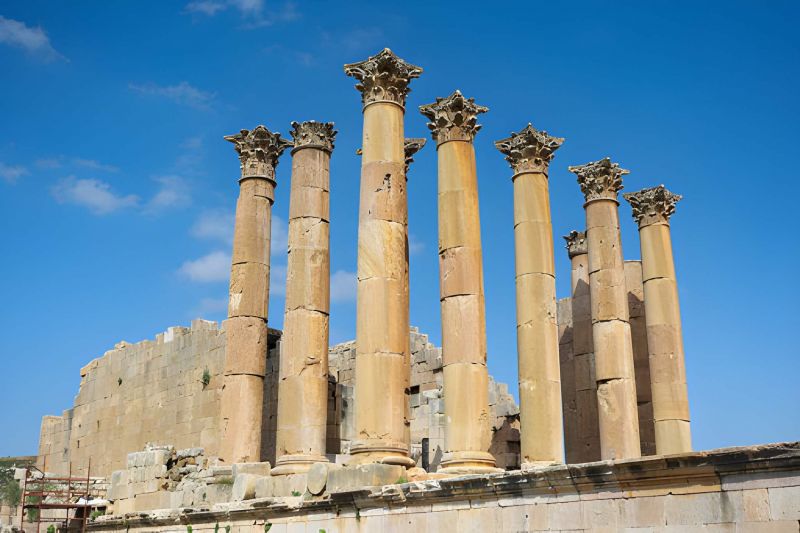
Another architectural gem, the Temple of Artemis, stands as a tribute to the city’s patron goddess. Its towering Corinthian columns—some still upright after nearly two millennia—testify to the engineering genius of ancient builders. The temple’s platform offers panoramic views of the cityscape, making it a favorite for photographers chasing the golden Jordanian light. Nearby, the Nymphaeum, a grand ornamental fountain, once gushed with water, symbolizing vitality and prosperity. Together, these structures create a harmonious symphony of stone, art, and faith that continues to impress modern visitors.
The Roman Theatres of Jerash: Echoes of Applause and Artistry
Among the most striking features of the Jerash Roman ruins are its two magnificent theatres. The South Theatre, capable of holding over 3,000 spectators, served as the stage for plays, musical performances, and civic ceremonies. Its acoustics are so finely tuned that a whisper from center stage can be heard from the highest tier. Standing here, one can almost hear the echoes of laughter and applause that once filled the air. The North Theatre, smaller but equally elegant, hosted meetings and cultural events during the city’s heyday. Today, these venues often host modern performances during the Jerash Festival of Culture and Arts, where ancient stones come alive with music and dance once more.
Both theatres embody the Roman dedication to community and performance. Their semi-circular design and intricate stonework highlight how Jerash embraced both functionality and aesthetic grace. They remind visitors that this city, though ancient, still hums with the energy of human creativity and celebration.
The Spiritual and Cultural Significance of Jerash
Beyond its physical beauty, Jerash was a melting pot of cultures, religions, and artistic influences. Pagan temples, Roman civic buildings, and later Byzantine churches coexisted within its walls. The city became a reflection of the empire’s diversity—where Greek myths, Roman law, and Eastern traditions intertwined. During the Byzantine period, Jerash saw the construction of over a dozen churches adorned with mosaics depicting animals, plants, and geometric patterns. These remnants highlight the city’s transition from pagan worship to Christianity. Even today, the fusion of faiths and philosophies can be traced through the site’s architecture and inscriptions.
Visitors often describe Jerash as more than ruins—it’s a spiritual encounter with time. The quiet majesty of its temples and theatres evokes a sense of reverence for human ingenuity and endurance. Standing at the heart of the forum, one feels connected to generations who built, worshiped, and dreamed within these same walls.
How to Experience the Jerash Roman Ruins Like a Local Explorer
To truly grasp the essence of Jerash, exploration should be unhurried. Arrive early to watch the morning sun illuminate the columns, casting long golden shadows across the stones. Begin at Hadrian’s Arch, the monumental gateway built to honor the emperor’s visit, and follow the ancient path through the Hippodrome—where chariot races once thrilled spectators—to the Oval Plaza. From there, stroll along the Cardo Maximus, imagining the chatter of merchants selling textiles and spices. The scent of antiquity clings to every breeze, making each corner a journey into the past. Combine your visit with a day trip through Egypt and Jordan Tours for a broader historical adventure that connects civilizations across borders.
Guided tours offer deep insights into the city’s layout, architecture, and legends. Many local guides are passionate historians who breathe life into ancient stones, recounting stories of emperors and myths that shaped Jerash. After exploring, relax in nearby Jerash City, where modern cafes serve aromatic Jordanian coffee and traditional dishes. It’s the perfect end to a day immersed in history.
Preservation Efforts and Modern Archaeological Discoveries
Preserving the Jerash Roman ruins is a monumental task that demands ongoing dedication. Archaeologists continue excavations, uncovering hidden chambers and forgotten streets. Conservation efforts focus on stabilizing fragile columns, restoring mosaics, and improving visitor pathways. The Jordanian Department of Antiquities collaborates with international teams to ensure that Jerash remains a living museum. Recent discoveries of ancient coins, statues, and inscriptions have shed new light on daily life in Roman Gerasa—revealing stories of artisans, merchants, and priests who once animated the city.
Advancements in digital mapping and 3D reconstruction now allow researchers to recreate Jerash’s grandeur virtually. These projects not only preserve its legacy but also make the site accessible to global audiences. For travelers seeking meaningful cultural experiences, Jerash stands as a testament to Jordan’s commitment to preserving its heritage alongside other landmarks like the Roman theatres of Jerash and the Amman Citadel.
Practical Travel Tips for Visiting Jerash Roman Ruins
Jerash is easily accessible from Amman by car or tour bus, making it a perfect day trip for visitors exploring Jordan’s northern region. The best time to visit is during spring and autumn when the weather is mild, and the sunlight enhances the site’s pale honey-colored stones. Wear comfortable walking shoes, carry water, and take your time exploring. Entry tickets are available on-site, and hiring a local guide enriches your experience immensely.
For travelers planning extended itineraries, combining Jerash with other Jordanian marvels such as Petra City, the Dead Sea, and Wadi Rum creates a journey through epochs of human achievement. Those seeking all-inclusive experiences can consider Luxury Egypt Tours that link both countries’ ancient legacies for an unforgettable exploration of the region’s shared past.
Why the Jerash Roman Ruins Should Be on Every Traveler’s Bucket List
Jerash captivates because it offers more than architectural beauty—it’s an emotional bridge between civilizations. Unlike static museum exhibits, these ruins breathe. They pulse with the energy of bygone eras and invite personal reflection on humanity’s enduring spirit. Whether you’re wandering beneath the Corinthian columns of the Temple of Artemis or tracing chariot marks on the Cardo Maximus, you’re walking through living history. The Jerash Roman ruins remind us that great civilizations never truly vanish; they echo through stones, stories, and the hearts of those who visit.
Frequently Asked Questions about Jerash Roman Ruins
1. Where are the Jerash Roman ruins located?
The Jerash Roman ruins are situated in northern Jordan, about 48 kilometers north of Amman. The site lies within the modern town of Jerash, making it easily accessible by road. Its location on ancient trade routes contributed significantly to its prosperity during the Roman Empire.
2. What makes the Jerash Roman ruins unique?
Jerash is one of the best-preserved Roman provincial towns in the world. Its complete city layout—including theatres, temples, forums, baths, and colonnaded streets—offers visitors a rare glimpse into Roman urban life. The site’s distinctive Oval Forum and remarkably intact Cardo Maximus set it apart from other archaeological locations.
3. When is the best time to visit Jerash?
The ideal time to explore the Jerash Roman ruins is during spring (March to May) and autumn (September to November). These seasons provide comfortable temperatures and clear skies that enhance the visual experience. Summer can be hot, while winter occasionally brings rain.
4. How long should I spend exploring Jerash?
Visitors should allocate at least three to four hours to fully appreciate the site. This allows enough time to walk through the major highlights like Hadrian’s Arch, the Hippodrome, the Oval Forum, the Temple of Artemis, and both theatres. History enthusiasts may wish to spend a full day to absorb the site’s intricate details and peaceful ambiance.
5. Is Jerash part of any combined tour in Jordan?
Yes, many travel agencies include Jerash in broader itineraries covering Jordan’s top attractions. It’s often featured alongside 5 Day Jordan Tour programs or combined packages like <a href='https://www.egypttoptours.com/Egypt/combined-tours-with-egypt/egy


