
Memphis Egypt: The Legendary Ancient Capital of the Pharaohs

Long before modern Cairo rose from the desert sands, Memphis Egypt stood proudly as the beating heart of the ancient world. This magnificent city, once the old Egyptian capital, served as the cradle of civilization, innovation, and divine kingship. Nestled at the mouth of the Nile Delta, Memphis was more than a city—it was a symbol of eternity and power. Founded around 3100 BCE by King Menes, who unified Upper and Lower Egypt, Memphis became the first capital of a united Egypt. For over eight centuries, it remained the political, cultural, and spiritual core of the kingdom, influencing everything from architecture to religion, trade, and governance. With the colossal statue of Ramses II and the temple of Ptah—the god of craftsmen and creation—Memphis flourished as a hub of art and devotion. The echoes of its glory still whisper through the ruins, reminding the world of Egypt’s ancient might.
Today, a visit to Memphis Egypt offers travelers a mesmerizing glimpse into the dawn of civilization. It’s often combined with nearby treasures such as Saqqara and the Great Pyramids of Giza, forming a historical triangle that narrates Egypt’s rise to greatness. Whether you’re delving into the mysteries of the pharaohs or exploring the origins of Egyptian art and sculpture, Memphis remains a must-see for any history lover. For modern explorers, it’s easy to include Memphis in expertly designed Egypt Vacation Packages that highlight the country’s most iconic landmarks. Let’s journey back in time and unveil the fascinating story of Memphis—the ancient capital that shaped a civilization.
The Founding of Memphis Egypt: Where History Began
According to ancient chronicles, Memphis was founded by King Menes, the unifier of Upper and Lower Egypt, around 3100 BCE. Strategically located near the apex of the Nile Delta, the city became a guardian between north and south, standing as both a political and spiritual mediator. The Egyptian name for Memphis, ‘Ineb-Hedj,’ meaning ‘The White Walls,’ likely referred to the gleaming limestone fortifications that surrounded the royal palace. Over time, this capital evolved into a bustling metropolis filled with temples, workshops, markets, and schools of artisans. The city’s prosperity was powered by its enviable position on trade routes along the Nile, enabling it to control commerce from Africa to the Mediterranean. The unification of Egypt made Memphis not only the first capital but also the seat of divine power, where pharaohs were seen as living gods on earth.
The Religious Importance of Memphis: City of Ptah
Religion anchored the life of Memphis Egypt. The city’s main deity, Ptah, was revered as the divine craftsman, the god who created the universe by speaking it into existence. His grand temple, Hut-ka-Ptah, later inspired the Greek term “Aigyptos,” from which the name Egypt itself was derived. The priests of Memphis held immense influence, serving not only religious functions but also administrative and political roles. Their temple complexes became centers of learning and innovation. Artists, masons, and architects dedicated their masterpieces to Ptah, Sekhmet, and Nefertum—the Memphite triad of gods. The spiritual aura of Memphis made it a pilgrimage site for worshippers across Egypt, reinforcing its position as the country’s religious heart long before Thebes or Alexandria rose to prominence.
Memphis as the Capital of Power and Politics
Throughout the Old Kingdom, Memphis remained the core of Egypt’s administrative power. The royal palaces, vast bureaucracy, and army headquarters were based here, making it the engine that drove Egypt’s prosperity. The pharaohs, considered the intermediaries between the gods and humanity, ruled from the heart of Memphis. It was under their direction that Egypt saw the construction of monumental complexes like the pyramids at Giza and Saqqara Necropolis. The city’s political influence extended into foreign relations, serving as a hub for diplomacy, trade, and cultural exchange. As the capital flourished, foreign envoys and merchants from distant lands visited Memphis, bringing exotic goods and ideas that enriched Egyptian civilization.
Art, Architecture, and Innovation in Memphis
Memphis Egypt was the melting pot of creativity, where art and architecture reached extraordinary levels of sophistication. The city’s artisans perfected the carving of statues, including the colossal figures of pharaohs that once graced temple entrances. Among the most famous is the massive statue of Ramses II, discovered near the city and now displayed near the open-air museum of Memphis. Skilled sculptors captured not only physical likeness but divine essence, producing works that continue to mesmerize modern visitors. The temples were architectural marvels, adorned with columns and reliefs depicting mythological scenes. Many artistic innovations born in Memphis later spread across the empire, influencing temples in Luxor Temple and Philae. The city also fostered early advancements in mathematics, engineering, and medicine, making it a cradle of ancient science.
The Economic Prosperity of Memphis: Trade and Agriculture
Memphis thrived not only on politics and religion but also on its economic prowess. Its proximity to the fertile Nile Delta turned it into an agricultural powerhouse. Wheat, barley, and papyrus were cultivated in abundance, sustaining both the local population and the wider empire. The city’s harbors and docks bustled with merchants trading gold, copper, incense, and precious stones. The Nile provided an efficient transportation artery, linking Memphis to Upper Egypt and the Mediterranean coast. The economic engine of Memphis was so strong that even as political power gradually shifted to Thebes and other cities, Memphis maintained its importance as a center of trade and industry. Visitors today can still imagine the lively scenes of markets filled with traders, craftsmen, and farmers exchanging wares in the shadow of grand temples.
Memphis Egypt and Its Connection to Saqqara and Giza
Memphis didn’t stand alone—it formed part of a larger network of sacred and royal sites. Just a stone’s throw away lies Saqqara, home to the Step Pyramid of Djoser—the world’s first stone monument—designed by the brilliant architect Imhotep. This revolutionary structure marked a turning point in architectural history, and its proximity to Memphis underscores the city’s central role in early innovation. To the north, the Giza Plateau hosts the eternal wonders of the Great Sphinx of Giza and the pyramids, the ultimate expressions of pharaonic ambition and Memphite craftsmanship. Most likely, the workforce, artisans, and planners who built these marvels hailed from Memphis. For modern travelers, combining a Pyramids, Memphis and Saqqara Tour provides a comprehensive journey through Egypt’s early dynastic history.
The Decline and Legacy of Memphis
As time flowed like the Nile itself, new powers emerged. The capital eventually moved to Thebes during the Middle and New Kingdoms, and later to Alexandria under the Ptolemies. Yet, Memphis never vanished—it adapted. Even during foreign rule, it remained a vital religious and economic center. Greek and Roman travelers wrote admiringly about its temples and colossal statues. Over centuries, floods, earthquakes, and shifting sands took their toll, but the spirit of Memphis endured. Today, the ruins whisper stories of divine kings and ancient glory. Archaeologists continue to unearth artifacts that shed light on the city’s grandeur, including inscriptions, tombs, and fragments of colossal monuments. Memphis stands as a timeless symbol of Egypt’s enduring genius—a place where civilization was born and legacy immortalized.
Modern Discovery and Tourism in Memphis Egypt
Modern excavations have turned Memphis into a fascinating archaeological park, drawing visitors from every corner of the globe. The open-air museum showcases the majestic statue of Ramses II, a striking alabaster sphinx, and remnants of the temple of Ptah. Travelers exploring Memphis often extend their journey to nearby sites through curated Luxury Egypt Tours that connect history with comfort. Those seeking a deeper Nile experience can follow the ancient river’s path on Best Nile River Cruises, tracing the same waters that nourished Memphis millennia ago. The city’s proximity to Cairo makes it an easy day trip, ideal for history enthusiasts and photographers alike. Standing among the remains, one can almost hear the ancient hymns to Ptah echoing through time.
Preserving Memphis: Egypt’s Efforts to Protect Its Heritage
Recognizing the immense cultural value of Memphis Egypt, UNESCO declared the area, along with its vast necropolis, a World Heritage Site in 1979. Efforts to conserve its monuments and excavate new sections continue under the direction of Egypt’s Ministry of Antiquities. Advanced technologies like 3D scanning and digital mapping are helping preserve what centuries of erosion have tried to erase. Tourism programs promote responsible travel, ensuring that visitors appreciate Memphis without harming its delicate ecosystem. For those planning a journey, expert guides and Egypt Private Tours offer immersive experiences that bring the old capital’s history to life.
Frequently Asked Questions About Memphis Egypt
1. Where is Memphis Egypt located today?
Memphis lies about 20 kilometers south of Cairo, near the modern town of Mit Rahina. It sits on the west bank of the Nile River, close to the ancient necropolis of Saqqara. Visitors can easily reach it from the capital on a short drive or guided Cairo Day Tour.
2. Who founded Memphis Egypt?
King Menes, also known as Narmer, is credited with founding Memphis around 3100 BCE after uniting Upper and Lower Egypt. He established Memphis as the first capital of the unified kingdom, marking the beginning of dynastic rule in Egypt’s long history.
3. What was Memphis famous for in ancient times?
Memphis was renowned for its grand temples, especially those dedicated to Ptah, the god of creation. It was a center for art, sculpture, trade, and religion, boasting monumental statues, sacred bulls (Apis), and schools of craftsmanship. The city symbolized Egypt’s power and divine kingship.
4. What relics remain in Memphis today?
Modern visitors can explore the colossal limestone statue of Ramses II, the alabaster sphinx, and the ruins of the temple of Ptah. Archaeological excavations continue to reveal new treasures, including tombs, stelae, and inscriptions that shed light on Memphis’s glorious past.
5. How can I visit Memphis Egypt?
Memphis can be visited as part of day excursions from Cairo or in combination with nearby sites like Saqqara and Giza. Travelers can book guided experiences through specialized Egypt Travel Guide services or as part of extended Combined Tours with Egypt that include major destinations along the Nile.
Conclusion: Why Memphis Egypt Still Captivates the World
Memphis Egypt isn’t just a ruin—it’s a living chronicle of human achievement. As the old Egyptian capital, it gave birth to enduring art, architecture, and faith that influenced civilizations for millennia. Every stone, statue, and tablet tells a story of ambition, devotion, and creativity that shaped the essence of Egypt. Visiting Memphis today means stepping into a world where gods once walked among mortals and where the seeds of empire first took root. For travelers yearning to connect with history’s heartbeat, Memphis offers an unforgettable journey through time—an experience as timeless as the Nile itself.
"


Babylon Fortress: The Timeless Guardian of Old Cairo’s Heritage
Discover Babylon Fortress in Coptic Cairo, a historic Roman stronghold by the Nile. Explore its architecture, Christian heritage, Islamic conquest history, and nearby landmarks like the Hanging Church and Coptic Museum.
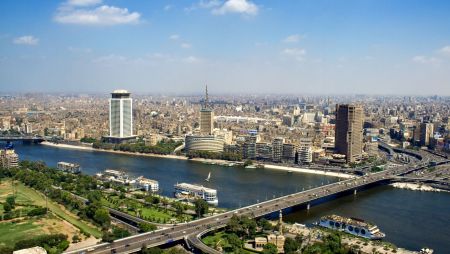
Cairo City – The Beating Heart of Egypt
Cairo City is Egypt’s capital and largest metropolis, located along the Nile River. Known for its ancient wonders like the Pyramids of Giza and the Egyptian Museum, Cairo blends Pharaonic, Islamic, and Coptic heritage with modern city life.

Khan al-Khalili : The Timeless Heartbeat of Egypt’s Bazaar Culture
This is where modern Cairo meets medieval charm, where every alley has a story, and every shopkeeper holds a piece of Egypt’s heritage. If you want to feel the rhythm of Cairo, Khan al-Khalili is where it beats loudest.
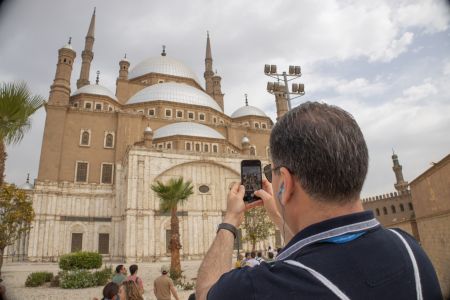
The Alabaster Mosque of Cairo: The Majestic Crown of the Citadel
In a city layered with millennia of history, the Alabaster Mosque remains one of the most powerful expressions of faith, pride, and vision — a must-visit for anyone exploring the rich soul of Egypt.

The Nile River: Lifeblood of Egypt and Africa's Eternal Pulse
The Nile River isn’t just a river—it’s a witness to history, a provider of life, and a force that continues to shape the destiny of Africa. From ancient wonders to modern cities
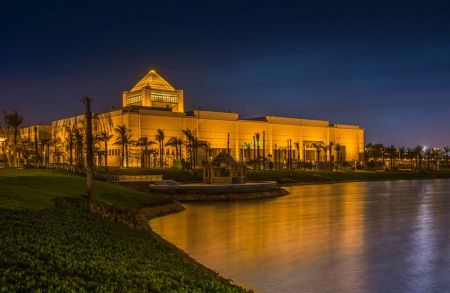
The National Museum of Egyptian Civilization: A Timeless Tribute to Egypt’s Heritage
The National Museum of Egyptian Civilization is not just a treasure trove of artifacts—it’s a bold reimagining of how history should be preserved, shared, and lived. By weaving together the diverse threads of Egypt’s cultural identity,
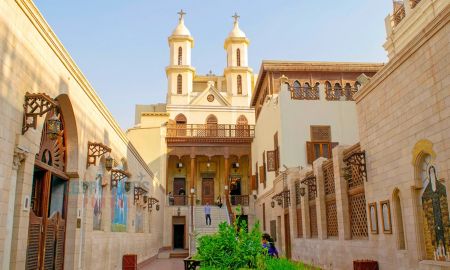
Coptic Cairo: Unveiling the Spiritual Heart of Old Cairo
Coptic Cairo is far more than a tourist attraction—it’s a profound journey into the roots of Egyptian Christianity and the rich layers of Cairo’s multi-faith heritage.
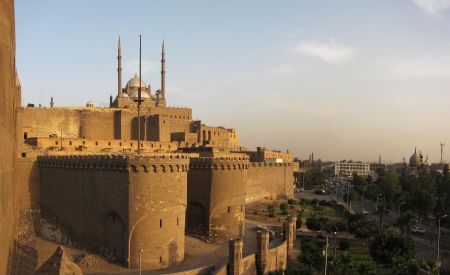
Salah El Din Citadel: Cairo’s Legendary Fortress of Power and Legacy
Salah El Din Citadel is more than stone walls and minarets—it’s a timeless fortress that has defined Egypt’s political and spiritual landscape for centuries.
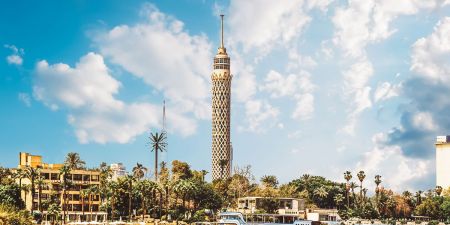
Cairo Tower: Egypt’s Iconic Skyscraper in the Heart of the Capital
The Cairo Tower is more than just a tall structure—it’s a national symbol, an architectural masterpiece, and a cultural experience rolled into one.
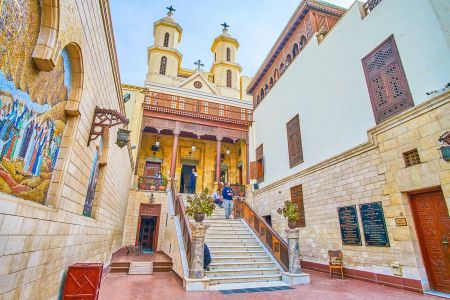
The Hanging Church : A Spiritual Marvel Suspended Over Old Cairo
The Hanging Church is more than just an ancient monument—it’s a living testament to Egypt’s Christian soul and the endurance of faith across centuries. Its elevated position above the Roman ruins reflects not only architectural brilliance but also spiritual triumph.
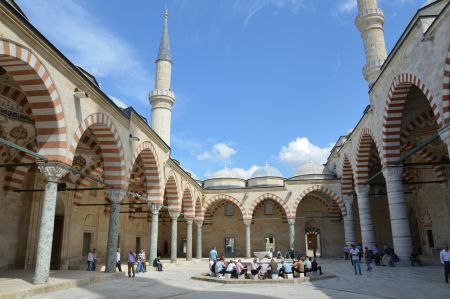
Al Azhar Mosque : Cairo’s Beacon of Islamic Scholarship and Architectural Majesty
Al Azhar Mosque is more than Cairo’s spiritual jewel—it’s the soul of Islamic learning and a timeless testament to faith’s enduring power. For over a thousand years, its walls have echoed the prayers of believers and the thoughts of scholars.
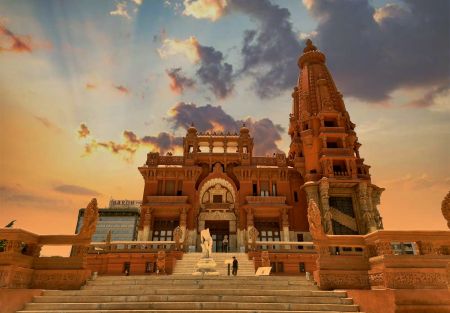
Baron Empain Palace: A Belgian Marvel in the Heart of Heliopolis, Cairo
With its intricately carved sandstone façade, spiral staircases, panoramic tower, and eerie atmosphere, the Baron Empain Palace is no ordinary residence. It’s a time capsule, a statement of cross-cultural elegance, and one of Cairo’s most photogenic and unusual sites.
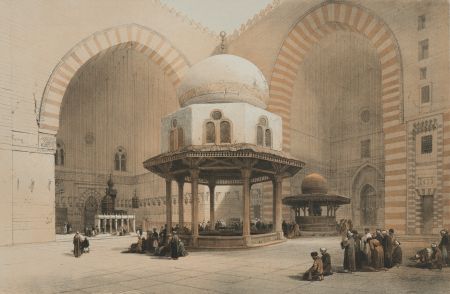
Sultan Hassan Mosque : Cairo’s Monument of Power, Faith, and Architectural Perfection
The Sultan Hassan Mosque is a grand 14th-century Mamluk landmark in Cairo, known for its massive size, stunning architecture, and role as both a mosque and Islamic school.
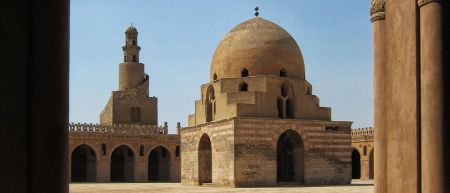
Mosque of Ibn Tulun : Cairo’s Timeless Abbasid Masterpiece
The Mosque of Ibn Tulun is Cairo’s oldest intact mosque, built in the 9th century by Ahmad Ibn Tulun. Known for its vast courtyard and unique spiral minaret, it showcases pure Abbasid architecture and remains a serene, historic gem in the heart of the city.

El Moez Street : Cairo’s Historic Heart of Islamic Heritage and Architectural Splendor
El Moez Street is a historic thoroughfare in Islamic Cairo, famed for its stunning collection of medieval mosques, madrasas, palaces, and markets. It offers a vivid glimpse into Cairo’s Islamic heritage and centuries-old urban life.
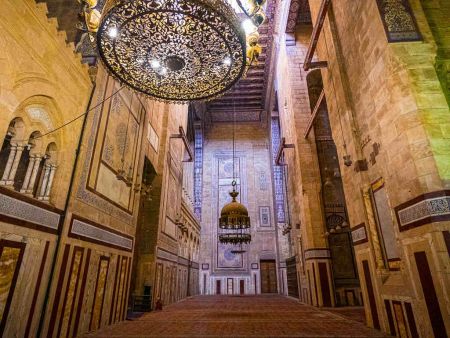
Al Rifai Mosque : A Royal Masterpiece in the Heart of Cairo
Al Rifai Mosque isn’t just another stop on Cairo’s historical trail—it’s a profound reflection of Egypt’s royal lineage, spiritual diversity, and architectural prowess.
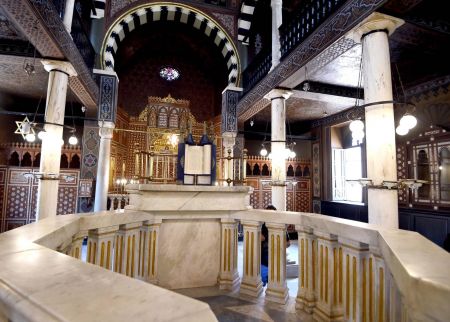
Ben Ezra Synagogue: A Historic Gem in the Heart of Old Cairo
Ben Ezra Synagogue tells a story that few buildings can—a story of migration, worship, community, and scholarly preservation. In a city dominated by mosques and churches, this quiet, beautifully preserved synagogue stands as a bridge across faiths, cultures, and centuries.
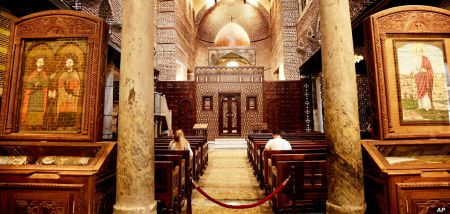
Abu Serga Church
Abu Serga Church is more than an architectural relic; it is a sacred refuge soaked in history, faith, and reverence. As one of the holiest Christian sites in Egypt, it continues to inspire pilgrims, historians, and travelers alike.
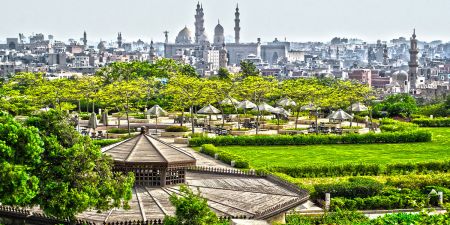
Al Azhar Park : Cairo’s Green Jewel of Culture and Serenity
Al Azhar Park Cairo is far more than a beautifully landscaped garden—it’s a dynamic symbol of cultural revival, urban sustainability, and community renewal.
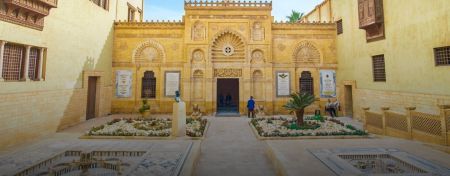
The Coptic Museum
The Coptic Museum is a must-visit for anyone interested in Christian Egyptian art, early Christian history, or the evolution of religious identity in Egypt.
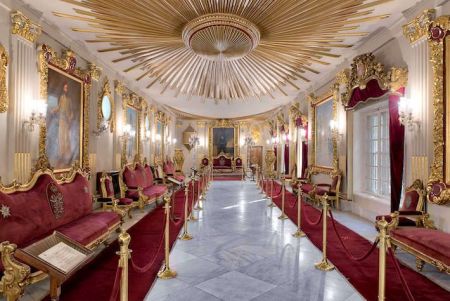
Abdeen Palace : A Royal Legacy in the Heart of Cairo
Abdeen Palace Cairo stands as a living monument to Egypt’s royal past, reflecting the country’s rich political and artistic evolution. Its collection is unmatched, its architecture spellbinding, and its significance deeply rooted in national identity.
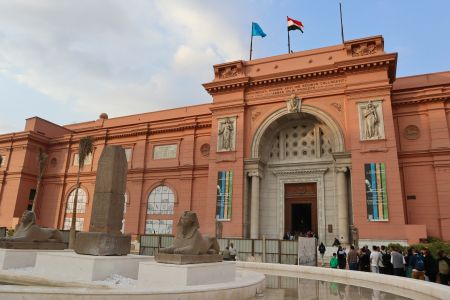
The Egyptian Museum of Cairo: Gateway to Ancient Egypt’s Treasures
A visit to the Egyptian Museum in Cairo is not just a tour through history — it's a spiritual, intellectual, and emotional journey. It brings to life stories carved in stone, written on papyrus, and buried under sand for thousands of years.
Our Partners
Our Awesome Partners