The Eternal Legend of Osiris and Isis: Ancient Egypt's Divine Tale of Love, Betrayal, and Rebirth
The legend of Osiris and Isis stands as one of the most profound and enduring myths in ancient Egyptian civilization. It weaves a tale of divine royalty, jealousy, sacrifice, and resurrection that shaped the spiritual consciousness of ancient Egypt for millennia. Rooted in the heart of Egyptian mythology, the story symbolically represents the eternal cycle of life, death, and rebirth along the fertile banks of the Nile River. More than just myth, it forms the very foundation of Egyptian religious beliefs, influencing temple rituals, funerary customs, and the concept of the afterlife. The myth of Osiris and Isis goes far beyond an ancient tale—it captures the essence of Egyptian identity and their unshakable faith in immortality.
According to ancient texts and temple inscriptions, Osiris once ruled as a just and wise king, bringing civilization and agriculture to humankind. His reign was guided by harmony and truth, but his jealous brother Set, god of chaos and desert storms, plotted against him. Through deceit and murder, Set dismembered Osiris and scattered his body across Egypt. Isis, his devoted wife and goddess of magic, undertook a perilous journey to find and reassemble his body parts, restoring him through her divine powers. This act of love and devotion not only resurrected Osiris but also gave birth to Horus, their son, destined to avenge his father and reclaim the throne. The myth immortalizes the triumph of order over chaos and the promise of resurrection beyond death—a central belief reflected in countless tombs, temples, and papyri across Egypt.
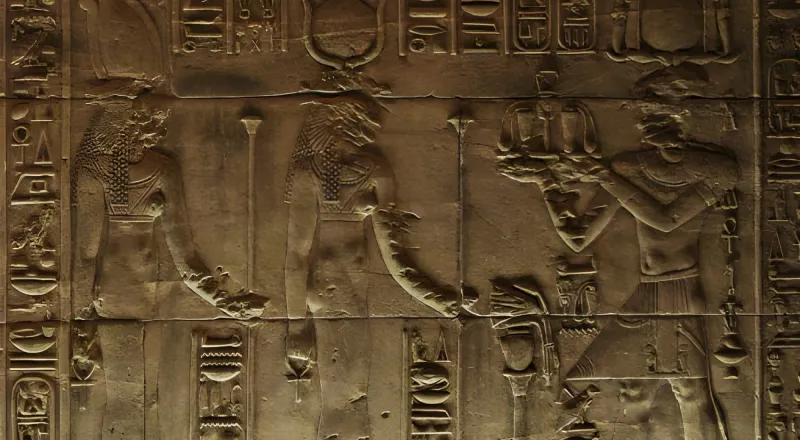
For travelers exploring Egypt today, the myth comes alive in sacred sites such as the Temple of Philae dedicated to Isis, the Temple of Horus at Edfu, and the Abu Simbel Temples that honor divine kingship. These monuments serve as timeless tributes to Osiris, Isis, and Horus, preserving their story for future generations. Whether you’re sailing along the Nile River or exploring the tombs at Abydos, the legend of Osiris and Isis continues to echo through stone walls, hieroglyphs, and sacred art.
Origins of the Osiris and Isis Myth in Ancient Egyptian Religion
The origin of the legend of Osiris and Isis can be traced back to Egypt’s earliest dynasties, possibly the pre-dynastic era. The story was first recorded in the Pyramid Texts and later expanded in the Coffin Texts and the Book of the Dead. Osiris, as the god of the afterlife and vegetation, symbolized fertility and regeneration. Isis, his consort, embodied magic, motherhood, and divine protection. Together, they represented cosmic balance—the unison of life and death, creation and renewal. The myth aligned closely with the natural rhythms of the Nile: its annual flooding, the death of the crops during drought, and their rebirth during inundation. Through this lens, the gods mirrored nature itself.
Ancient priests at temples like The Temple of Seti I in Abydos performed sacred rituals to honor Osiris, reenacting his death and resurrection. These ceremonies aimed to ensure the fertility of the land and the eternal life of the pharaoh. The Osiris Mysteries became an annual event, attracting thousands of worshippers from across Egypt. It’s no wonder that Abydos became a pilgrimage site for Egyptians seeking spiritual renewal and assurance of life after death.
The Characters of the Divine Drama: Osiris, Isis, Set, and Horus
Osiris was the benevolent ruler who brought order and civilization to Egypt, teaching his people agriculture, laws, and peace. His green skin depicted fertility and rebirth, while his crown symbolized divine kingship. Isis, often depicted with a throne-shaped headdress, was the epitome of loyalty and maternal care. Her magical prowess surpassed that of any god or mortal, earning her reverence as the goddess of healing and protection.
Set, Osiris’s brother, represented the antithesis of order. As the god of chaos, storms, and deserts, he thrived on destruction and envy. His treachery sparked the myth’s most dramatic turn—Osiris’s death. Yet, it’s Isis’s unmatched devotion and perseverance that alter the course of destiny. Their son Horus, the falcon-headed god, became the avenger and restorer of justice, embodying the perpetual struggle between light and darkness, order and chaos.
The Betrayal and Death of Osiris: The Fall of the Divine King
Set’s conspiracy to overthrow Osiris forms the core of the legend’s tragedy. Disguised as a gesture of goodwill, Set crafted an ornate chest, promising to gift it to anyone who fit perfectly inside. When Osiris unsuspectingly lay within, Set and his accomplices sealed it shut and cast it into the Nile. The coffin drifted to Byblos, where it became entwined within a tamarisk tree. Isis, upon discovering her husband’s fate, journeyed across lands to retrieve the chest, guided by her magic and unwavering love.
However, Set’s malice knew no end. Upon discovering that Isis had recovered Osiris’s body, he dismembered it into fourteen pieces and scattered them throughout Egypt. This act symbolized chaos fragmenting unity—a metaphor for societal and spiritual disarray. The goddess’s quest to reclaim and reassemble these fragments brought divine order back to Egypt, teaching humanity about perseverance and sacred restoration.
The Resurrection of Osiris and Birth of Horus
After gathering Osiris’s scattered remains, Isis used her magic and the help of Anubis to restore his body. Through sacred rituals—the earliest depiction of mummification—Osiris was resurrected, not as a living king, but as the ruler of the underworld. His resurrection became a cornerstone of Egyptian afterlife beliefs, signifying that death was not the end but a passage to eternal existence.
During this divine union, Isis conceived Horus. The birth of Horus in the marshes of the Nile Delta symbolizes renewal and hope. As Horus grew, he prepared to challenge Set for the throne, initiating one of mythology’s most epic divine contests. Horus’s ultimate victory reinstated cosmic balance, legitimizing divine kingship and ensuring the continuity of Ma’at—the principle of truth and harmony.
Symbolism and Religious Impact of the Osiris-Isis Legend
The story of Osiris and Isis resonated deeply with Egyptian culture, influencing every aspect of their religious and political life. The myth reinforced the divine nature of the pharaohs, portraying them as earthly embodiments of Horus who succeeded Osiris. Funerary practices—from mummification to tomb architecture—mirrored the myth’s promise of resurrection. The Osirian cycle became central to Egyptian spirituality, offering a moral framework that defined good versus evil, love versus betrayal, and life versus death.
Temples across Egypt, such as Kom Ombo Temple and Luxor Temple, display carvings depicting Isis nursing Horus—a symbol of divine motherhood that later influenced artistic representations of the Virgin Mary. The Osiris myth also inspired later civilizations, including Greek and Roman interpretations, where Isis’s cult spread widely across the Mediterranean world.
The Legacy of Osiris and Isis in Modern Egypt
Today, the legend of Osiris and Isis continues to fascinate scholars, travelers, and spiritual seekers alike. Visitors exploring sites like the Nubian Museum or Karnak Temple can trace the myth’s influence through hieroglyphic inscriptions, temple reliefs, and ritual artifacts. The myth’s timeless message of love conquering death still resonates, capturing the human yearning for redemption and eternal life. For modern travelers, understanding the story enriches visits to Egypt’s sacred landscapes—from Abydos to Philae—where the divine saga of Osiris and Isis lives on in stone and spirit.
Frequently Asked Questions about The Legend of Osiris and Isis
What is the legend of Osiris and Isis about?
The legend tells of Osiris, a just king murdered by his jealous brother Set, and Isis, his wife, who resurrects him through magic. Their son Horus later avenges his father’s death and restores harmony, symbolizing the victory of life over death and order over chaos.
Where can I see monuments related to Osiris and Isis in Egypt?
You can explore sacred sites like the Temple of Philae, Edfu Temple, and Temple of Seti I. These temples preserve inscriptions and scenes depicting the divine story of Osiris, Isis, and Horus.
How did the Osiris myth influence ancient Egyptian beliefs?
The myth formed the foundation of Egyptian religion, shaping their understanding of death, resurrection, and kingship. It inspired mummification rituals, funerary texts, and the belief that every soul could achieve eternal life, just as Osiris did.
Who were the main gods in the Osiris and Isis story?
The principal deities are Osiris, Isis, Set, and Horus. Each represents a cosmic principle—Osiris as life and resurrection, Isis as devotion and magic, Set as chaos, and Horus as justice and divine kingship.
What modern lessons does the legend of Osiris and Isis teach?
The myth reminds us of the enduring power of love, faith, and resilience. It illustrates that even in moments of loss and betrayal, harmony and renewal are attainable through perseverance and compassion.
Osiris and Isis are central to Egyptian myth. Meet the wider cast of ancient Egyptian gods.