

Choosing how you sail the Nile matters as much as choosing where you go. Egypt's Nile cruises come in several distinct styles — from large modern cruise ships to small, wind-powered dahabiyas — and each offers a very different pace, atmosphere and price. This guide walks through every main Nile cruise type, what a typical cruise includes, how long to sail and when to go, so you can choose the option that fits your trip.
What is a Nile cruise, and what will you see?
A classic Nile cruise sails the stretch between Luxor and Aswan and can be joined in either direction. Along the way you visit the great sites of Upper Egypt: the temples of Karnak and Luxor and the Valley of the Kings around Luxor; the beautifully preserved Temple of Horus at Edfu; the twin temple of Kom Ombo on the riverbank; and, around Aswan, the Philae Temple and the High Dam. Cruising lets you wake up beside a different monument each morning while unpacking only once — which is why it remains the most rewarding way to see this part of Egypt.
Standard Nile cruise ships
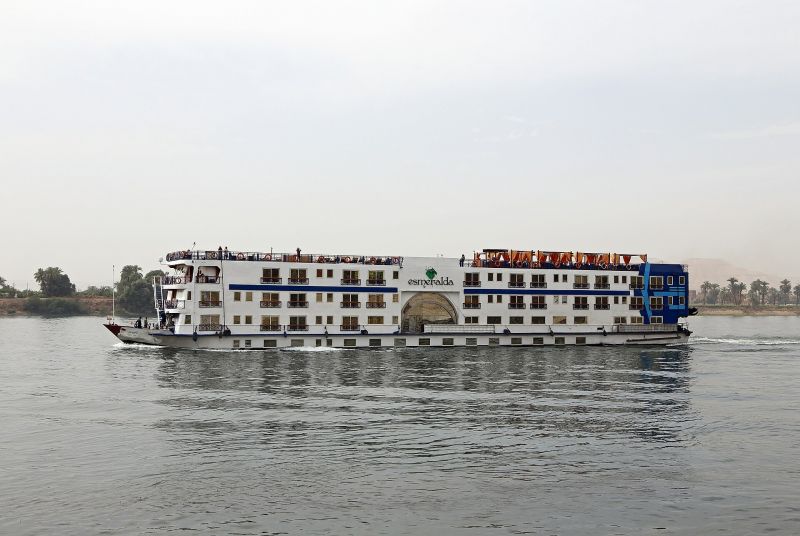
These are the classic multi-deck river boats you'll see moored in rows at Luxor and Aswan. They carry a larger number of guests across three or four decks, usually with a sun deck and a small pool, a main restaurant serving buffet meals, and a lounge for evening entertainment. Cabins are comfortable and typically have a river-facing window or a small balcony. Most sail the Luxor–Aswan route on either a shorter three- or four-night programme or a longer week-long loop. They are the most widely available and best-value way to cruise the Nile, and a solid choice for first-time visitors and families.
Luxury Nile cruise ships
Luxury ships follow the same river route but give you noticeably more space per guest, larger cabins and suites, higher-end dining (often with à-la-carte options), attentive service and quieter, more elegant public areas. Many carry fewer guests than a standard ship of the same size, so the onboard feel is calmer. If you want a premium experience — or you're marking a special occasion such as an anniversary or a honeymoon — this is the category to look at.
Dahabiya sailing boats
A dahabiya is a small, traditional wind-powered sailing boat with only a handful of cabins — often around six to a dozen guests in total. Because it carries so few people, the atmosphere is intimate and unhurried, and the boat can moor at quiet islands and small sites that the big ships sail straight past. There is no disco or crowded buffet; instead you get sun-deck lounging, home-style cooking and the gentle sound of the sail. Dahabiyas are ideal for couples, small groups of friends and anyone who values peace, personal space and a slower, more authentic sail. They usually take a little longer to cover the same route because they rely partly on the wind.
Feluccas
A felucca is the small, open lateen-rigged sailboat you'll see criss-crossing the river at Aswan. It's perfect for a short, scenic sail — a sunset hour around the islands — rather than a multi-night cruise. Budget travellers sometimes take an overnight felucca between Aswan and Kom Ombo, sleeping on deck under the stars; it's basic but memorable. Many visitors simply add a short felucca ride alongside a longer cruise for the experience.
Lake Nasser cruises
Less well known is the Lake Nasser cruise, which sails the great reservoir south of the High Dam between Aswan and Abu Simbel. It visits the rescued Nubian monuments — including the temples of Kalabsha and, of course, the colossal facades of Abu Simbel — and the lake is far quieter than the main river. It's a wonderful add-on for repeat visitors or anyone who wants to go deeper into Nubian history.
How long should a Nile cruise be?
As a rule of thumb: a 3–4 night cruise covers the Luxor–Aswan highlights and pairs well with a few days in Cairo; a 7-night cruise adds a more relaxed pace, extra sailing time and often a return leg. Dahabiyas tend to run on the longer end because they sail rather than motor. Choose the length that lets you enjoy the sites without rushing.
What's usually included — and what isn't
Most cruises are sold on a full-board basis (breakfast, lunch and dinner on board) with your cabin and onboard facilities. Guided sightseeing, entrance fees, drinks, tips and optional extras such as a hot-air balloon over Luxor are commonly charged separately — always check exactly what your specific programme includes before you book, as this varies by boat and operator.
Best time for a Nile cruise
Upper Egypt is warm year-round and very hot in high summer, so many travellers prefer the cooler months for comfortable daytime sightseeing. For a full month-by-month breakdown, see the best time to visit Egypt.
Which Nile cruise is right for you?
- Best value & availability: a standard cruise ship.
- Premium comfort & special occasions: a luxury cruise ship.
- Intimate, quiet & authentic: a dahabiya.
- A short, romantic sail: a felucca.
- Nubian monuments, away from the crowds: a Lake Nasser cruise.
Plan your Nile cruise from your country
See our curated Nile cruise collections for travellers from the USA, the UK, Australia and Canada.
Image: Marc Ryckaert, CC BY-SA 4.0, via Wikimedia Commons