

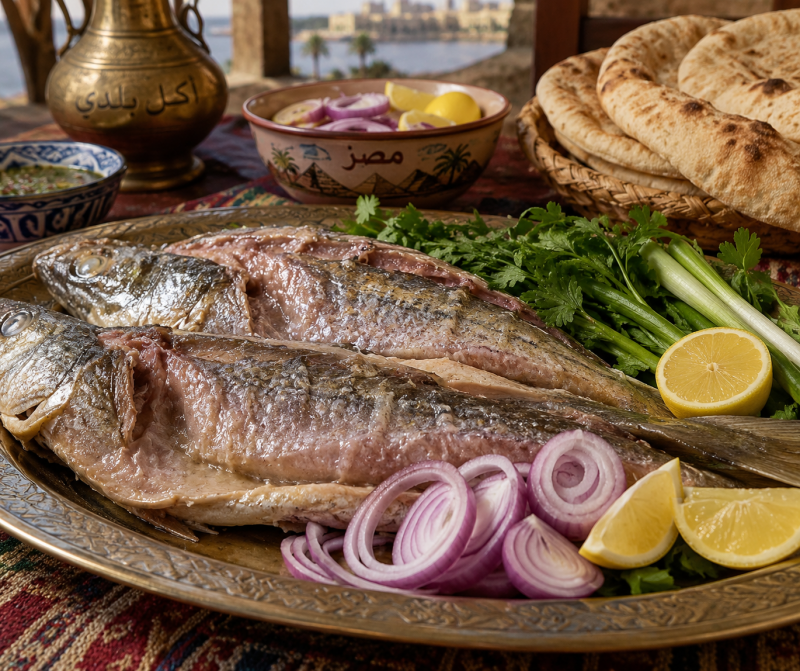
Feseekh: Egypt's Traditional Fermented Fish
Feseekh is a traditional Egyptian dish of fermented, salted, and dried mullet fish, most famously eaten during the spring festival of Sham El Nessim. It is prepared using a unique preservation process and is considered both a delicacy and a cultural symbol, with families across Egypt gathering to share this centuries-old culinary tradition.
Key Takeaways
- Feseekh is a fermented and salted fish, traditionally mullet, consumed during Sham El Nessim, Egypt’s spring festival.
- The preparation of feseekh is a highly specialized process carried out by skilled artisans called fisakhani.
- Eating feseekh is deeply rooted in Egyptian heritage, with origins tracing back to ancient celebrations of spring.
- Feseekh is available in Egyptian markets, especially in Alexandria and cities along the Nile Delta.
- Children under 6, Egyptian seniors 60+, Egyptians with special needs, and orphaned children are eligible for free entry at Egyptian monuments and museums, per the Ministry of Tourism and Antiquities.
Egyptian cuisine is a vibrant tapestry woven from ancient traditions, and few dishes embody this heritage more distinctively than feseekh. This pungent, salty delicacy is not for the faint of heart, yet it holds a cherished place in the hearts of Egyptians. Feseekh is most famously associated with Sham El Nessim, a national holiday marking the arrival of spring. On this day, families gather to share festive meals featuring feseekh, boiled eggs, and fresh vegetables, celebrating renewal and the enduring power of tradition.
For travelers seeking to immerse themselves in authentic Egyptian culture, tasting feseekh is an invitation to connect with centuries of history. The dish’s origins stretch back to ancient Egypt, where preservation techniques were prized for their ability to sustain communities through the seasons. Today, the careful craft of feseekh-making is entrusted to a select group of artisans known as fisakhani, whose expertise ensures both safety and flavor. Whether you are a culinary adventurer or simply curious about Egypt’s living traditions, exploring the story of feseekh offers a unique window into the soul of the country.
While some visitors may be more familiar with Egypt’s ancient temples or monumental pyramids, the culinary rituals surrounding feseekh are equally integral to the Egyptian experience. The following guide delves into the history, preparation, and cultural significance of feseekh, as well as practical tips for those eager to sample this iconic dish during their travels.
The Origins and History of Feseekh
Feseekh’s story begins thousands of years ago, with roots entwined in the ancient Egyptian celebration of spring. Sham El Nessim, the festival where feseekh is most commonly enjoyed, was originally a Pharaonic holiday marking the vernal equinox. Over generations, the festival evolved, but the tradition of eating preserved fish endured, symbolizing rebirth and abundance in the Nile Delta.
Historical records suggest that the preservation of fish was vital in ancient Egypt, where the Nile’s bounty provided sustenance year-round. Salt-curing and fermentation were practical methods to ensure food security, allowing communities to thrive even when fresh catches were scarce. Today, feseekh remains a living link to this heritage, its pungent aroma evoking memories of springtime celebrations and family gatherings across the country.
Travelers fascinated by Egypt’s ancient customs may also enjoy exploring related traditions, such as the myth of Osiris and Isis, which highlights the enduring connection between food, ritual, and renewal in Egyptian culture.
How Feseekh Is Made: The Art of Fermentation
Crafting feseekh is a meticulous process that demands skill and patience. The fish of choice is typically mullet, sourced from the Nile or the Mediterranean. Preparation begins with cleaning and salting the fish, which is then tightly packed in barrels and left to ferment for several weeks. This fermentation process is carefully monitored, as improper handling can result in unsafe products.
The responsibility for producing feseekh falls to the fisakhani, specialized artisans whose expertise is often passed down through generations. These experts know precisely how much salt to use, how long to cure the fish, and how to ensure the final product is both flavorful and safe to eat. The result is a fish that is firm, salty, and aromatic, with a flavor profile unlike any other dish in Egyptian cuisine.
Curious food lovers can discover more about Egypt’s diverse culinary landscape by sampling other traditional dishes, such as sambousek, a crispy stuffed pastry enjoyed throughout the country.
Where to Find Feseekh in Egypt
Feseekh is widely available in Egyptian markets, especially during the weeks leading up to Sham El Nessim. Alexandria, with its rich fishing heritage, is renowned for its high-quality feseekh, but markets in Cairo and cities along the Nile Delta also offer excellent options. When purchasing feseekh, it is essential to buy from reputable fisakhani shops, as proper preparation is crucial for safety.
Travelers exploring Egypt’s coastal regions, such as Dahab or the serene Siwa Oasis, may encounter local variations of preserved fish, each with its own unique twist. Sampling feseekh in its homeland is an adventure for the senses, best enjoyed with fresh bread, onions, and lemon to balance its intense flavors.
Cultural Significance and Rituals
Feseekh is more than just a dish—it is a symbol of Egyptian identity and communal celebration. During Sham El Nessim, families gather in parks and along riverbanks to share festive picnics, with feseekh as the centerpiece. The act of eating feseekh together is a cherished ritual, marking the passage of seasons and the enduring bonds of family and community.
For many Egyptians, the annual feseekh feast is as much about tradition as it is about taste. The dish’s strong aroma and flavor evoke nostalgia, reminding people of childhood celebrations and the rhythms of the Nile. Visitors interested in Egypt’s living traditions can deepen their understanding by joining a local family for Sham El Nessim or exploring the country’s national parks during the spring festival.
Feseekh: Safety, Etiquette, and Practical Tips
Because feseekh is a fermented product, it must be prepared and stored with care. Only purchase feseekh from trusted vendors, and always inspect the fish for freshness before consuming. It is typically served sliced, accompanied by green onions, lettuce, and Egyptian flatbread. Lemon juice is often squeezed over the fish to enhance the flavor and cut the saltiness.
Many Egyptians enjoy feseekh as part of a larger meal, which may include boiled eggs and other springtime specialties. For those new to feseekh, sampling a small portion is recommended, as its robust flavor can be an acquired taste. If you are exploring Egypt’s culinary scene, consider pairing your feseekh experience with a visit to the Library of Alexandria, where the city’s maritime history is celebrated in both cuisine and culture.
Feseekh and Egyptian Festivals: Sham El Nessim
Sham El Nessim, literally “smelling the breeze,” is one of Egypt’s oldest festivals, celebrated on the Monday following Coptic Easter. The holiday is marked by outdoor gatherings, music, and special foods. Feseekh is the star of the picnic, a dish that unites generations in a shared celebration of spring’s arrival.
While Sham El Nessim is the most popular occasion for eating feseekh, the dish is also enjoyed at family gatherings and special events throughout the year. Visitors interested in experiencing Egyptian festivals firsthand can plan their trip to coincide with Sham El Nessim or explore the country’s rich calendar of cultural events as part of a luxury tour.
Frequently Asked Questions about Feseekh
What is feseekh made from?
Feseekh is made from mullet fish that is salted, dried, and fermented using traditional methods by skilled fisakhani artisans.
Is feseekh safe to eat?
Feseekh is safe to eat when purchased from reputable vendors who follow proper preparation and fermentation techniques; always inspect the fish for freshness before consumption.
When is feseekh traditionally eaten?
Feseekh is most commonly eaten during Sham El Nessim, Egypt’s spring festival, but it may also be enjoyed at family gatherings and special occasions throughout the year.
What does feseekh taste like?
Feseekh has a strong, salty, and pungent flavor with a firm texture, balanced by accompaniments like lemon, onions, and bread.
Can tourists try feseekh in Egypt?
Tourists can try feseekh in Egyptian markets and restaurants, especially in Alexandria and the Nile Delta, but should purchase from trusted vendors for safety.
Are there any special rules for visiting Egyptian monuments during Sham El Nessim?
Egyptian monuments and museums offer free entry for children under 6, Egyptian seniors 60+, Egyptians with special needs, and orphaned children, per the Ministry of Tourism and Antiquities; these exemptions may differ at certain sites during holidays.
Combining Culinary and Cultural Experiences in Egypt
Sampling feseekh is just one way to engage with Egypt’s rich culinary heritage. Pair your gastronomic adventures with visits to the country’s iconic sites, such as the Dahabiya cruises along the Nile, or the majestic Luxury Nile Cruises that reveal Egypt’s timeless landscapes.
For those seeking a deeper exploration, consider a 5 Day Tour to Egypt Luxury or a 10 Days Luxury Holiday Tour Egypt to experience both the country’s culinary and archaeological wonders. Adventurous travelers may even opt for a 5 Star Luxury Nile Cruise or cruise aboard the Mövenpick MS Royal Lily for a blend of comfort and culture.
Beyond the table, Egypt’s allure extends to its natural wonders. Explore the national parks or embark on a Cairo Tour from Hurghada By Air to discover the diversity of the Egyptian landscape.
Feseekh in Context: Comparing Egypt’s Culinary Heritage
| Dish | Main Ingredient | Preparation Method | Occasion | Region |
|---|---|---|---|---|
| Feseekh | Mullet fish | Salted, dried, fermented | Sham El Nessim | Nile Delta, Alexandria |
| Sambousek | Flour, meat/cheese/vegetables | Stuffed, fried | Ramadan, year-round | Nationwide |
| Koshari | Rice, lentils, pasta | Layered, topped with sauce | Everyday, street food | Nationwide |
| Molokhia | Jute leaves | Stewed with garlic and broth | Family meals | Nationwide |
Comparing feseekh with other beloved Egyptian dishes highlights the country’s culinary diversity. While feseekh is reserved for special occasions, dishes like koshari and molokhia are staples of daily life. To deepen your understanding of Egypt’s food culture, consider reading about the differences between Mexican and Egyptian pyramids or the key differences between pyramids in Sudan and Egypt.
Travel Tips for Experiencing Feseekh
To fully appreciate feseekh, time your visit to coincide with Sham El Nessim in spring. Seek out reputable fisakhani in Alexandria or Cairo, and do not hesitate to ask locals for recommendations. Remember that all monument ticket prices are in Egyptian Pounds (EGP), per the Ministry’s official ticketing service, and that mobile phone photography is free of charge at Ministry sites. Card payment is available at self-service machines for site tickets at Giza, but card acceptance is not guaranteed at every site. Always check for updated hours and policies before visiting, as official fees and hours are revised periodically.
Pair your culinary explorations with Egypt’s rich tapestry of attractions, from the ancient splendor of Karnak Temple to the tranquil beauty of the Siwa Oasis. For a luxury experience, consider booking a 10-Day Egypt Luxury Trip with Dahabiya Nile Cruise and immerse yourself in the flavors, sights, and sounds of Egypt.