
Education in Ancient Egypt was not merely a privilege; it was an essential pillar that sustained one of the most advanced civilizations in history. From the banks of the Nile to the grandeur of royal palaces and temples, learning shaped every aspect of Egyptian life. The Egyptians understood that knowledge was a divine gift, a sacred tool that empowered priests, scribes, and officials to preserve order, record history, and decode the mysteries of the gods. Unlike many other ancient societies, Egypt valued structured education, particularly for those destined for administrative or religious roles. The intellectual rigor that characterized Egyptian schooling produced remarkable achievements in mathematics, medicine, architecture, and astronomy—fields still revered today.
At the heart of Egyptian education lay moral instruction, discipline, and devotion to the divine order known as Ma’at. The curriculum was not just about reading and writing; it was about cultivating wisdom, humility, and respect. Students memorized ancient texts, copied sacred writings, and practiced calligraphy on wooden tablets or papyrus scrolls. The Ancient Egyptian Papyrus Art played an instrumental role in preserving these lessons, showcasing how education intertwined with artistry and spirituality. The scribes, the intellectual elite of Egypt, were the guardians of literacy and recordkeeping, ensuring that Egypt’s glorious past would never fade into silence.
Today, understanding how education flourished in Ancient Egypt provides not only a glimpse into their civilization but also reveals how knowledge can shape a nation’s destiny. The Egyptians’ dedication to learning, religious ethics, and administrative precision continues to inspire the modern world, proving that education was—and remains—the most powerful legacy of this ancient land.
The Origins of Education in Ancient Egypt: Divine Wisdom and Cultural Purpose
 See our best Egypt tour packages →
Education in Ancient Egypt had its roots in divine belief. The Egyptians viewed knowledge as a sacred inheritance from Thoth, the god of wisdom, writing, and science. Schools were often attached to temples, where priests acted as teachers, merging spiritual enlightenment with intellectual training. This dual purpose—spiritual and practical—made education a central pillar of Egyptian culture. The early schools, known as ‘Houses of Instruction,’ trained young boys destined to become scribes, priests, or government officials. These institutions set strict standards and taught through repetition, memorization, and discipline.
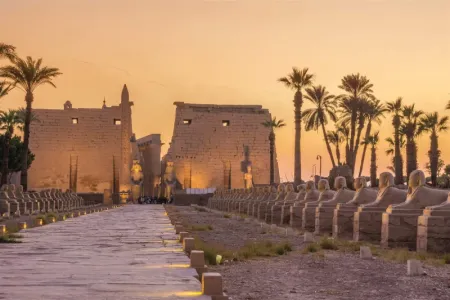
The influence of education extended to administration and governance. Each royal decree, religious ritual, and agricultural record depended on educated scribes who could read and write hieroglyphics. Without literacy, Egypt’s vast bureaucracy would have collapsed. The system ensured that only the most capable individuals filled the ranks of power. The Luxor Temple and other monumental complexes often served as centers of both worship and learning, housing libraries that contained countless papyrus scrolls filled with sacred and administrative texts.
The Role of Scribes: Guardians of Egyptian Knowledge
In Ancient Egypt, scribes were the true bearers of intellectual authority. They occupied a social status second only to the priesthood and the royal court. Becoming a scribe required years of rigorous training, as they had to master complex scripts—hieroglyphic, hieratic, and later demotic. The ability to record taxes, trade transactions, medical prescriptions, and royal decrees made scribes indispensable to the state. Their education included grammar, arithmetic, and moral teachings emphasizing honesty, patience, and loyalty. The famous “Instructions of Ptahhotep” served as both a moral and practical guide for aspiring scholars.
The training of scribes occurred in temple schools, often under the watchful eyes of senior priests. Students began their studies at a young age, spending long hours practicing writing on ostraca or wooden boards before advancing to papyrus. Their discipline was legendary, and their influence on cultural preservation unmatched. Many of the texts that reveal Egypt’s grandeur—such as those describing the Great Pyramids of Giza—were penned by these learned professionals.
Education for Priests: The Sacred Path of Enlightenment
Priestly education in Ancient Egypt was profoundly spiritual. Priests were considered intermediaries between gods and humans, so their instruction extended far beyond literacy. They studied astronomy, mathematics, medicine, and theology to perform complex rituals and predict celestial events. Each temple functioned as a center of religious education, where sacred chants, hymns, and ceremonial protocols were memorized. To ascend through the ranks, priests had to prove mastery of sacred texts and purity of character.
Temples like the Temple of Philae were not merely places of worship but also hubs of learning. Within their walls, priestly students engaged in studies comparable to modern scientific research, exploring anatomy through mummification and observing the movement of stars to predict agricultural cycles. Their knowledge later influenced Greek and Roman scholars, confirming Egypt’s central role in early global education.
Women's Education in Ancient Egypt: The Silent Scholars
Unlike many ancient societies, women in Egypt enjoyed certain educational privileges, especially those of noble or priestly descent. While most girls learned domestic skills at home, some received formal education to manage estates or participate in temple life. Female scribes and priestesses were rare but not unheard of. Their education focused on reading, writing, and religious ceremonies. Women like Merit-Ptah, one of the first known female physicians, demonstrate the intellectual capabilities accessible to educated Egyptian women.
These advancements highlight the progressive nature of Egyptian society. Learning was not limited to one gender or class; it was a reflection of the divine order that valued harmony and balance. The Famous Egyptian Queens like Hatshepsut, who ruled with wisdom and authority, benefited from the same intellectual and moral education that shaped Egypt’s male elites.
Subjects and Curriculum: The Building Blocks of Egyptian Education
Education in Ancient Egypt revolved around practical knowledge and moral instruction. The core subjects were reading, writing, arithmetic, and religious teachings. Students copied traditional wisdom texts that emphasized virtues like diligence, respect, and humility. For those entering specialized fields, subjects expanded to include geometry, accounting, medicine, and architecture. Mathematics was essential for engineering marvels like temples and monuments, while astronomical studies guided agricultural planning along the Nile River.
Beyond academics, Egyptian education emphasized loyalty to the pharaoh and faith in the gods. Each lesson reinforced the sacred duty of maintaining Ma’at—cosmic order and justice. This moral framework ensured that education created not just skilled workers but virtuous citizens. The curriculum’s balance between practical and spiritual wisdom made Egypt’s system one of the most enduring educational models of the ancient world.
Educational Institutions and Learning Spaces in Ancient Egypt
The physical spaces where education thrived were as remarkable as the curriculum itself. Schools, or ‘Per-Ankh’ (House of Life), were attached to temples and royal complexes. These institutions preserved archives, scientific treatises, and religious manuscripts. The Library of Alexandria, though established later during the Hellenistic period, drew inspiration from these earlier centers of Egyptian learning. Each Per-Ankh served as a repository of national memory, where knowledge was transcribed, stored, and passed down through generations.
Students lived under strict discipline. Lessons began at sunrise, and teachers known for their stern approach maintained order through rigorous instruction. Yet, these environments encouraged curiosity and critical thinking. Pupils engaged in debates, recited proverbs, and copied hymns to improve their grammar and moral understanding. Education was not static—it evolved, adapting to administrative needs, religious developments, and scientific discoveries.
The Influence of Education on Egyptian Society
Education in Ancient Egypt shaped social hierarchies and sustained governance. The educated class—scribes, priests, and officials—formed the backbone of Egypt’s administration. They managed land records, taxation, and trade, ensuring the smooth function of the empire. The system also preserved social stability by instilling discipline and reverence for authority. Those who excelled academically could climb the social ladder, transforming humble origins into prestigious careers within the royal bureaucracy.
Education also influenced art, literature, and architecture. The literary works of Ancient Egypt, inscribed on temple walls and tombs like those in the Valley of the Kings, reflect the intellectual brilliance of trained scribes. Even the grand design of monuments like the Abu Simbel Temples required mathematical precision and astronomical knowledge taught within temple schools.
Legacy and Lasting Impact of Egyptian Education
The educational system of Ancient Egypt laid the groundwork for later civilizations. Greek scholars such as Pythagoras and Plato studied in Egyptian temples, absorbing the wisdom that would influence Western philosophy. Egyptian methods of recordkeeping inspired modern documentation practices, while their focus on ethical values remains a timeless lesson in leadership and morality.
Today, travelers exploring temple inscriptions and ancient scrolls on Best Nile River Cruises discover how deeply education shaped Egypt’s identity. The echoes of ancient classrooms still resonate through hieroglyphs, tomb paintings, and monuments that whisper the stories of learned men and women who once illuminated an empire.
 Explore our Cairo day tours →
FAQs About Education in Ancient Egypt
1. Who received education in Ancient Egypt?
Primarily, boys from noble and middle-class families attended temple schools to become scribes, priests, or administrators. However, some girls, particularly from elite families, received education for temple service or estate management.
2. What subjects were taught in Ancient Egyptian schools?
The curriculum included reading, writing, arithmetic, religion, morality, astronomy, and administrative skills. Advanced students learned medicine, geometry, and architecture—disciplines essential for state projects and temple design.
3. Where were educational institutions located?
Schools, known as ‘Houses of Life,’ were located near temples in major cities like Thebes and Memphis. These institutions also served as research libraries and scriptoria for copying sacred and scientific texts.
4. How did religion influence Egyptian education?
Religion shaped every aspect of education. Knowledge was considered sacred, and priests served as both educators and spiritual guides. Lessons often began with prayers, emphasizing the divine origins of wisdom.
5. What was the social impact of education in Ancient Egypt?
Education reinforced Egypt’s social hierarchy and stability. Literacy allowed individuals to attain influential positions, ensuring efficient governance and the preservation of Egypt’s cultural and political heritage.
See ancient Egypt for yourself Explore our Cairo day tours.
Explore more: Egypt Student & Educational Tours
See it in person. Explore our Egypt historical tours, or join one of our Luxor day tours or Aswan day tours.