

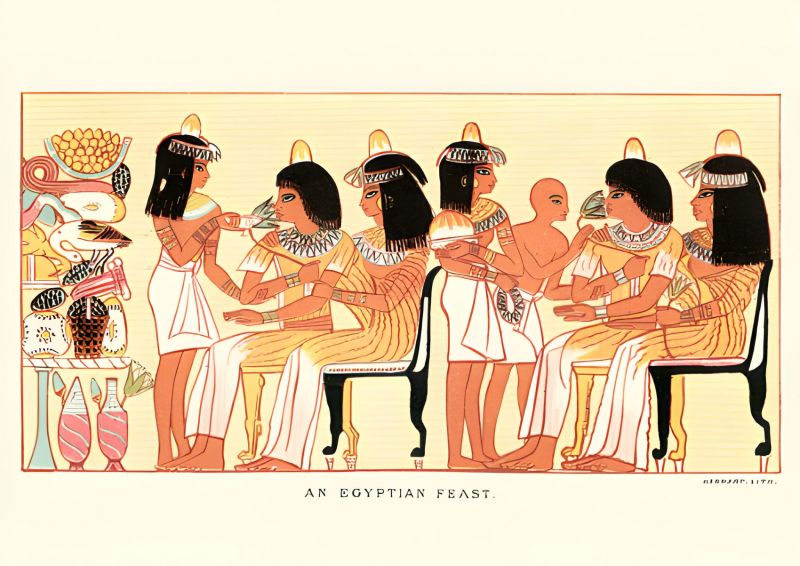
Ancient Egyptians ate a diet based on bread, beer, vegetables, fruits, and fish, with meat and luxury foods reserved for the wealthy and for festivals. Their cuisine was shaped by the Nile’s fertile banks, seasonal floods, and religious beliefs, resulting in a rich culinary heritage that influenced later Mediterranean diets and remains visible in modern Egyptian food culture.
Key Takeaways
- Bread made from emmer wheat and barley formed the staple of the ancient Egyptian diet.
- Beer was the most common beverage, consumed by all social classes and even children.
- Vegetables like onions, garlic, and leeks were eaten daily, while meat and fish were occasional treats.
- Honey, dates, and figs served as primary sweeteners in desserts and ceremonial dishes.
- Food offerings were central to ancient Egyptian religion and burial practices.
The Role of the Nile in Ancient Egyptian Cuisine
The ancient Egyptians’ diet was intrinsically tied to the Nile River, whose annual floods enriched the land and allowed for the cultivation of grains, vegetables, and fruits. The river also provided abundant fish, which were a crucial protein source for most people. Today, travelers exploring Egypt’s lush riverbanks on the Sonesta Moon Goddess Nile Cruise can still witness traditional farming techniques dating back millennia.
Staple Foods: Bread and Beer
Bread was the foundation of every meal, made primarily from emmer wheat and barley. The dough was often coarse, sometimes containing chaff, sand, or grit from stone grinding. Beer, brewed from partially baked bread and barley, was the everyday drink, providing calories and hydration. Both bread and beer were so essential that they featured in religious offerings and tomb paintings, as seen on visits to sites like Habu Temple.
Vegetables and Legumes: The Daily Fare
Vegetables were accessible to all classes, with onions, garlic, leeks, lettuce, and cucumbers being the most common. Lentils, chickpeas, and fava beans offered plant-based protein and were often cooked into stews. These ingredients remain prominent in modern Egyptian cuisine, as explored in our guide to Royal Egyptian Cuisine: Dishes of Kings & Pharaohs.
Luxury Foods and Banquets: What Did the Pharaohs Eat?
While commoners relied on simple fare, the elite enjoyed a wider variety of foods, including beef, mutton, wild fowl, and imported delicacies. Banquets featured roasted meats, sweet pastries, and copious amounts of wine. The pharaoh’s table was a symbol of power and divine favor, with elaborate feasts depicted in tomb art and historical records.
Meat, Fish, and Poultry
Meat was a luxury, typically reserved for the wealthy or for religious festivals. Cattle, sheep, goats, and geese were the main livestock. Fish from the Nile—such as tilapia and catfish—were common for all but were sometimes avoided during religious observances. Wild birds were hunted and served at feasts, as described in accounts of Napoleon's Egyptian Campaign.
Fruits, Sweets, and Flavorings
Fruits like dates, figs, grapes, and pomegranates added sweetness and nutrition. Honey was the primary sweetener, used in cakes and desserts. Herbs and spices—such as coriander, cumin, and dill—flavored stews and breads. These ingredients were not only culinary staples but also important in religious rituals and medicine, a tradition still seen in the oases of Wadi El Rayan.
Dining Customs and Social Rituals
Ancient Egyptians typically ate with their fingers, seated on mats or low stools. Meals were communal, reflecting family and social bonds. Food was also a key part of religious life, with offerings to the gods and the dead. Tomb paintings and archaeological finds reveal that even in the afterlife, Egyptians expected to dine well, as explored in the myth of Osiris and Isis.
Food and Religion: Offerings and Rituals
Food offerings were essential in temples and tombs, ensuring the favor of the gods and the sustenance of the deceased. Bread, beer, and fowl appear in countless inscriptions. The significance of these rituals can be traced at sites like The Citadel of Qaitbay, where ancient traditions meet modern Egyptian heritage.
Comparative Table: Common Foods of Ancient Egypt
| Food Item | Social Class Consumed | Main Ingredients | Modern Equivalent |
|---|---|---|---|
| Bread | All classes | Emmer wheat, barley | Baladi bread |
| Beer | All classes | Barley, emmer, water | Traditional Egyptian beer |
| Vegetable Stews | All classes | Lentils, beans, onions, garlic | Ful medames |
| Meat (beef, mutton) | Elite | Cattle, sheep, spices | Grilled kebabs |
| Fish | All classes | Nile tilapia, catfish | Samak mashwi |
| Fruits and Sweets | All classes | Dates, figs, honey | Basbousa, date pastries |
How Ancient Egyptian Food Shaped Modern Cuisine
Many staples of ancient Egyptian food persist in today’s kitchens. Dishes like ful medames (fava bean stew) and baladi bread trace their roots back thousands of years, forming the backbone of Egyptian breakfasts and street food. Modern culinary tours, such as the Best 11 Days Egypt Tour for Families, often include tastings and market visits that highlight this living heritage.
Exploring the evolution of Egyptian cuisine reveals influences from Greek, Roman, and Arab cultures, layered over ancient traditions. The continued importance of bread, beans, and beer underscores the enduring legacy of the Nile’s bounty, as experienced on a Steigenberger Senator cruise or while discovering Marsa Matruh.
Food, Class, and Gender in Ancient Egypt
Access to certain foods was shaped by social status, with the pharaoh and nobility enjoying the richest fare. Despite class divisions, communal eating and food sharing were widespread, reinforcing social cohesion.
Festivals and Special Occasions
Religious festivals and life milestones called for special foods—roast goose, sweet cakes, and wine. These feasts, often depicted in tomb murals, were opportunities for all classes to enjoy rare treats, echoing the spirit of modern celebrations along the Nile during the Best Nile River Cruises.
Practical Tips for Experiencing Ancient Egyptian Food Today
Travelers can sample dishes inspired by ancient recipes in Cairo, Luxor, and Aswan. Visiting local markets, bakeries, and family-run restaurants offers a window into Egypt’s culinary past. Those interested in immersive experiences should consider a 10 Day Egypt Tour Private or a combined Egypt and Jordan tour to explore regional differences and influences.
For day-trippers, the Cairo Day Tour from Luxor by Flight includes opportunities to taste local specialties and visit historical food markets.
Frequently Asked Questions about Ancient Egyptian Food
What was the most common food in ancient Egypt?
The most common food in ancient Egypt was bread made from emmer wheat and barley, which was consumed daily by all social classes and often accompanied by beer and vegetables.
Did ancient Egyptians eat meat regularly?
Ancient Egyptians ate meat infrequently; it was mainly reserved for the wealthy or for special occasions, while most people relied on fish, beans, and vegetables for protein.
What did ancient Egyptians drink?
Ancient Egyptians primarily drank beer, which was a staple beverage for adults and children alike, while wine was enjoyed mainly by the elite and during religious festivals.
What kinds of fruits and sweets did they have?
Ancient Egyptians enjoyed fruits such as dates, figs, grapes, and pomegranates, and used honey as their main sweetener in desserts and ceremonial foods.
Can travelers experience ancient Egyptian food today?
Travelers can experience ancient Egyptian-inspired foods by visiting traditional markets, bakeries, and restaurants in Egypt, or by joining culinary-focused tours that highlight dishes with origins in pharaonic times.
How did religion influence ancient Egyptian food?
Religion influenced ancient Egyptian food through ritual offerings of bread, beer, and fowl to the gods and the dead, and by shaping dietary customs during religious festivals and ceremonies.
What role did women play in ancient Egyptian food culture?
Women played a central role in ancient Egyptian food culture, handling food preparation, baking, and market transactions, as well as participating in communal feasts and religious rituals involving food.
How did the Nile River impact ancient Egyptian cuisine?
The Nile River provided fertile soil for growing grains and vegetables, as well as abundant fish, making it the foundation of ancient Egyptian cuisine and shaping the country’s food culture for millennia.
Are any ancient Egyptian foods still eaten today?
Many ancient Egyptian foods, such as baladi bread, ful medames, and dishes made with beans, onions, and garlic, remain staples of modern Egyptian cuisine and are widely enjoyed across the country.