

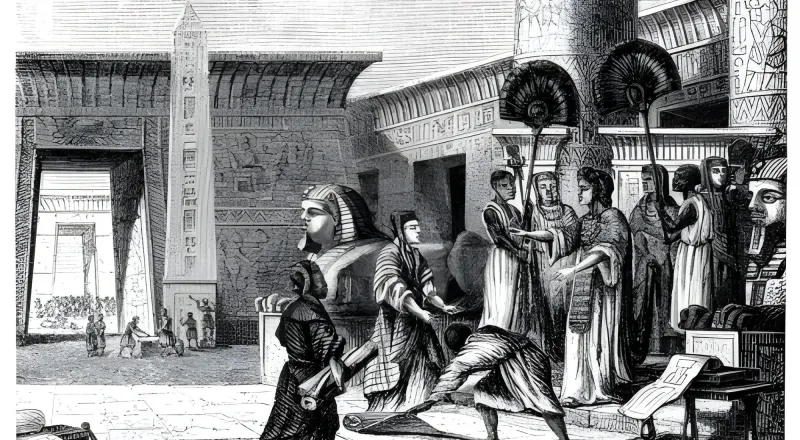
The Ancient Egyptian Calendar: A Timeless Marvel of Astronomy and Culture
The Ancient Egyptian calendar, one of the oldest and most sophisticated systems of timekeeping, played a crucial role in the organization of Egyptian civilization. This calendar wasn't merely a tool for counting days; it was a sacred instrument tied to agriculture, religion, and celestial observation. The Egyptians developed an incredibly accurate solar calendar over 5,000 years ago, influencing later systems, including the Julian and Gregorian calendars. Their understanding of the Nile's rhythms, the solar year, and star movements, particularly the rising of Sirius, shaped how they measured time and structured their society.
Driven by the need to predict the Nile’s annual flood—a lifeline for their agriculture—the Egyptians created a calendar that harmonized nature, astronomy, and divinity. The brilliance of the Ancient Egyptian calendar lay in its precision and practicality. It comprised 12 months of 30 days each, plus 5 additional days known as the ‘epagomenal days.’ Each of those extra days was dedicated to honoring gods such as Osiris, Isis, and Horus. By combining celestial events with divine significance, the Egyptians ensured that their calendar was not only functional but spiritually meaningful.
Understanding this ancient timekeeping system offers deep insight into the daily lives of Egyptians, their agricultural practices, and their religious ceremonies. Visitors exploring majestic landmarks like the Karnak Temple can still observe astronomical alignments reflecting the calendar’s influence. In fact, the calendar guided temple construction, festival scheduling, and the rhythm of the ancient world. Let’s delve into the fascinating design, evolution, and enduring legacy of the Ancient Egyptian calendar.
Origins of the Ancient Egyptian Calendar System
The origins of the Ancient Egyptian calendar date back to around 3000 BCE during the Early Dynastic Period. The system evolved from practical observation of the environment, particularly the Nile River and the stars. The heliacal rising of Sirius, known as Sopdet in Egyptian mythology, coincided with the annual inundation of the Nile, marking the New Year. This link between the heavens and Earth inspired the Egyptians to synchronize their agrarian cycles with celestial patterns.
The early calendar was lunar-based, containing months that alternated between 29 and 30 days. However, the Egyptians noticed it didn’t align well with the solar year. To solve this, they transitioned to a solar calendar consisting of 365 days—an extraordinary achievement for a civilization without telescopes. This reform ensured alignment with agricultural and religious events, providing predictability for farmers and priests alike.
The Structure of the Ancient Egyptian Year
The Egyptian year was divided into three main seasons—Akhet (Inundation), Peret (Emergence), and Shemu (Harvest)—each lasting four months. These reflected the natural cycle of the Nile River, which dictated Egyptian life. Akhet covered the flooding period, when fields were submerged and renewed by silt; Peret marked the growing season; and Shemu celebrated the harvest when abundance filled the granaries. Each month was named after local deities or significant festivals.
The 12 months contained 30 days each, and to balance the solar year, five additional days were added at the end, creating the 365-day year. These ‘epagomenal days’ were considered sacred and somewhat unlucky since they existed outside the regular months. This system became one of the earliest examples of a civil calendar, reflecting the Egyptians’ extraordinary attention to cosmic order and agricultural rhythm.
Religious Significance of the Epagomenal Days
Each of the five epagomenal days celebrated the birth of a major deity. The first day honored Osiris, the god of the afterlife; the second, Horus the Elder; the third, Seth; the fourth, Isis; and the fifth, Nephthys. These days also marked the transition between old and new years, symbolizing renewal and divine blessing. Temples such as the Temple of Hatshepsut exhibit reliefs referencing these divine celebrations, connecting architectural design with celestial cycles.
Calendrical Precision and Astronomical Observations
The Egyptian priests of Heliopolis, renowned astronomers, continuously refined the calendar using observations of Sirius and solar movements. Remarkably, they realized that the solar year was slightly longer than 365 days—about 365.25 days—but chose not to include a leap day. As a result, the calendar drifted by one day every four years relative to the solar cycle. This drift created a 1,460-year cycle, known as the Sothic cycle, after which the calendar realigned with the heliacal rising of Sirius. The priests used this phenomenon for long-term astronomical predictions and ritual timing.
Role in Agriculture, Religion, and State Administration
The Ancient Egyptian calendar guided every aspect of life, from farming to temple rituals to state governance. Farmers relied on it to determine when to plant and harvest crops. Priests used it to plan festivals, offerings, and ceremonies dedicated to gods like Ra and Osiris. Government officials used it to organize taxation, corvée labor, and building projects such as the Great Pyramids of Giza. The calendar thus unified society under one temporal rhythm, symbolizing harmony between divine order (Maat) and earthly life.
The Solar and Lunar Calendars: Dual Systems in Harmony
Egyptians maintained two parallel calendars: the civil (solar) calendar and the lunar (religious) calendar. The civil calendar was used for administrative and agricultural purposes, while the lunar calendar determined religious festivals. The lunar months began with the first visible crescent of the moon and lasted about 29.5 days. Since lunar and solar years didn’t align, festivals gradually shifted through the solar year, creating a cyclical rhythm that aligned with cosmic time.
This dual system allowed Egyptians to balance practicality with divine mystery. Temples like the Temple of Philae were oriented to celestial events, integrating lunar and solar cycles in rituals. Many inscriptions show priests recording both calendars side by side, demonstrating their mastery of celestial synchronization long before modern science formalized astronomy.
Festivals and the Egyptian New Year
The Egyptian New Year, known as Wepet Renpet, marked the heliacal rising of Sirius. This event heralded the flood season and symbolized rebirth, abundance, and cosmic alignment. The festival included offerings, music, and processions. Citizens decorated homes, and priests purified temples with sacred waters from the Nile. Modern visitors exploring Luxor Tours can still sense echoes of these grand traditions reflected in temple reliefs depicting seasonal festivities.
Influence on Later Civilizations
The Ancient Egyptian calendar significantly influenced Greek and Roman timekeeping. The Ptolemaic rulers later introduced a leap year system under Roman influence, aligning Egypt’s civil year with the Julian calendar. Many modern timekeeping concepts, such as the division of a year into 12 months, originated from this ancient design. Even the idea of marking the New Year based on astronomical events stems from Egyptian traditions.
Symbolism and Cultural Legacy
The calendar wasn’t just functional—it was symbolic of eternal order. Egyptians viewed time cyclically, not linearly. The daily journey of the sun god Ra across the sky mirrored the cycle of life, death, and rebirth. Each season corresponded to mythological themes: Akhet with chaos and creation, Peret with growth, and Shemu with completion and renewal. This deep spiritual connection remains visible in art and inscriptions found at monuments like the Abu Simbel Temples.
The Calendar’s Role in Egyptian Architecture and Astronomy
Ancient Egyptian temples, tombs, and monuments were aligned with celestial bodies based on the calendar. The sun’s rays illuminating the inner sanctuaries of temples during solstices symbolized divine presence. The most famous example is the Abu Simbel alignment, where sunlight reaches the statues of deities inside on two specific dates each year—marking Ramses II’s birthday and coronation. Such precision demonstrates how the calendar guided architectural design as well as religious timing.
At the Luxor Temple, inscriptions correspond to the annual Opet Festival, celebrating Amun’s rejuvenation. The interplay between architecture and time created living calendars carved in stone, ensuring Egypt’s cosmic balance continued for eternity.
Mathematical and Astronomical Genius
The priests' ability to track time so precisely stemmed from centuries of observation. Using simple tools like merkhets (astronomical sighting rods) and water clocks, they measured the sun’s movement and the timing of star risings. Their understanding of the solar year was so refined that when Greek scholars like Hipparchus studied Egyptian data, they used it to calculate the precession of the equinoxes. The calendar thus became a foundation for Western astronomy.
Modern Relevance of the Ancient Egyptian Calendar
Today, the Ancient Egyptian calendar continues to fascinate historians, archaeologists, and astronomers. It reflects humanity’s enduring curiosity about time and the heavens. For travelers exploring Egypt, understanding this calendar adds depth to visiting ancient sites. Discovering temples, tombs, and monuments through the lens of the ancient year transforms sightseeing into a journey through cosmic time. Those embarking on Best Nile River Cruises can imagine how the river’s ebb and flow once dictated the calendar’s rhythm and the prosperity of the entire civilization.
Preservation and Academic Study
Scholars continue to decode the Egyptian calendar through hieroglyphic inscriptions, papyri, and temple reliefs. Modern Egyptologists use astronomical software to align ancient records with celestial events, confirming the accuracy of Egyptian observations. The calendar stands as a remarkable example of early scientific thought interwoven with spiritual understanding. It shaped not only Egypt’s history but also humanity’s broader journey toward mastering time.
FAQs About the Ancient Egyptian Calendar
1. What was the purpose of the Ancient Egyptian calendar?
The Ancient Egyptian calendar served agricultural, religious, and administrative purposes. It helped predict the Nile’s flooding, plan crop cycles, and schedule ceremonies for gods, ensuring harmony between human activity and divine order.
2. How many days were in the Ancient Egyptian year?
The civil year consisted of 365 days—12 months of 30 days each plus 5 epagomenal days. These additional days were dedicated to the birth of five major deities and held deep spiritual significance.
3. What is the difference between the solar and lunar calendars in Ancient Egypt?
The solar calendar governed civil and agricultural life, while the lunar calendar guided religious festivals. The lunar year was shorter, so festivals gradually shifted through the solar year, creating a cyclical concept of time.
4. How did the Ancient Egyptian calendar influence modern calendars?
The Egyptian solar year inspired the Julian and later the Gregorian calendars. The idea of dividing the year into 12 months and recognizing a 365-day cycle originated in Ancient Egypt, forming the foundation for modern timekeeping.
5. Why was the rising of Sirius important to the Egyptian calendar?
Sirius, known as Sopdet, heralded the Nile’s annual inundation. Its heliacal rising marked the Egyptian New Year, symbolizing fertility, abundance, and renewal—a celestial event central to Egyptian cosmology and timekeeping.
Explore more: Egypt Student & Educational Tours


