

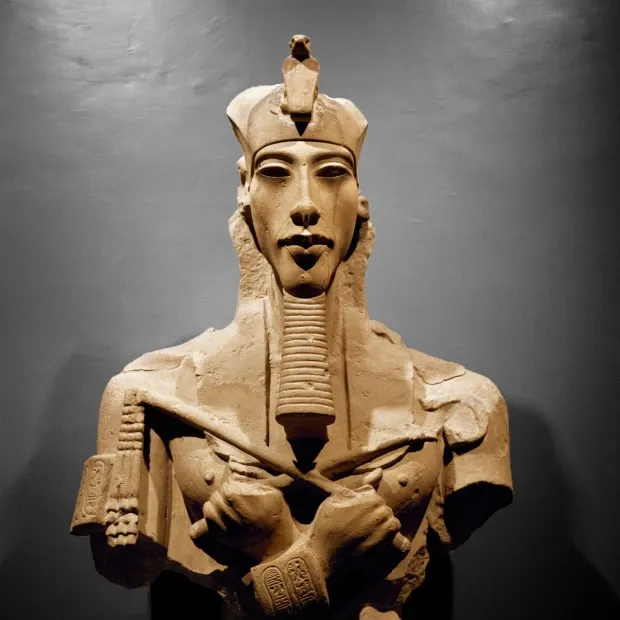
Was Pharaoh Akhenaten the Rebel King Who Changed Egypt Forever?
Pharaoh Akhenaten stands as one of the most enigmatic figures in ancient Egyptian history—a king whose radical ideas shook the very foundations of a civilization that had remained unshaken for millennia. Known as the ‘Heretic King’ or the ‘Rebel Pharaoh,’ Akhenaten dared to reimagine Egypt’s religious landscape, artistic expression, and political power structure. His reign, during the 18th Dynasty, wasn’t just a political era—it was a revolution of spirit and culture. Yet, his legacy remains polarizing: some view him as a visionary who pioneered monotheism, while others label him a tyrant who disrupted sacred traditions. To truly understand whether Akhenaten changed Egypt forever, we must delve deep into his radical reforms, his unique worldview, and the lasting ripples of his controversial rule.
Akhenaten’s story begins in a time of divine multiplicity, where gods and goddesses—like Amun, Ra, Isis, and Osiris—governed every facet of life. In this complex pantheon, Akhenaten introduced a seismic shift by elevating one deity, Aten, the sun disk, above all others. His new faith was not merely religious innovation—it was an audacious attempt to centralize both divine and royal authority. He moved Egypt’s capital from Thebes to a brand-new city, Akhetaten (modern-day Amarna), devoted entirely to Aten. In doing so, Akhenaten sought to erase centuries of tradition and replace it with his personal vision of truth and divinity.
For travelers today exploring sites along the Nile, from Thebes to Amarna, Akhenaten’s influence lingers like a haunting echo. Visiting historical wonders through Luxor Tours or exploring the sun-drenched temples of Upper Egypt reveals fragments of his ambitious reign—a reign that dared to redefine the essence of ancient Egypt itself.
Akhenaten’s Early Life and Rise to Power
Born as Amenhotep IV, the future Akhenaten was the son of Pharaoh Amenhotep III and Queen Tiye. His upbringing within the grandeur of Thebes was steeped in religious orthodoxy, where the cult of Amun reigned supreme. Yet even as a prince, he likely sensed the immense power the priesthood wielded—often rivaling that of the pharaoh himself. This imbalance perhaps planted the seed for his later rebellion. Upon assuming the throne, Amenhotep IV initially followed tradition, but within a few years, his radical transformation became evident. He abandoned his birth name and adopted ‘Akhenaten,’ meaning ‘Effective for Aten.’
His early reign was marked by harmonious relations with the powerful Amun clergy, but as his devotion to Aten intensified, so did his opposition to the entrenched religious order. The priests of Amun, whose influence extended deep into Egypt’s economy and politics, saw their privileges threatened. Akhenaten’s religious reforms weren’t just spiritual statements—they were strategic maneuvers to consolidate power under his own divine image.
Revolutionizing Religion: The Birth of Atenism
Akhenaten’s religious revolution is arguably his most defining legacy. By promoting Aten as the sole god, he dismantled the centuries-old framework of polytheism. Temples dedicated to other deities were closed, their wealth redirected to Aten’s new sanctuaries. This monotheistic—or monolatrous—faith centered around light, life, and the warmth of the sun. The imagery of Aten’s rays ending in open hands symbolized divine connection and the pharaoh’s role as the sole intermediary between god and people.
Yet, Akhenaten’s reform went beyond theology—it was propaganda wrapped in divine symbolism. By removing the priesthood’s intermediary function, he positioned himself as the only conduit of divine truth. The result was a centralized theocracy that blurred the lines between religion and government.
Visitors interested in ancient spirituality often encounter echoes of Atenism in temple architecture and inscriptions preserved along the Nile. On a serene Best Nile River Cruises, travelers can still witness the faded reliefs depicting Akhenaten and his family worshipping Aten beneath radiant sunbeams—a testament to one man’s daring vision of godhood.
Amarna: The City of the Sun Disk
Frustrated by the religious establishment of Thebes, Akhenaten founded a new capital city, Akhetaten—‘The Horizon of Aten.’ Built from the ground up in the barren cliffs of Middle Egypt, the city was a bold declaration of independence from Theban power. Akhetaten was meticulously planned: spacious temples open to sunlight, palaces adorned with delicate frescoes, and residential quarters reflecting a new artistic sensibility.
Unlike earlier Egyptian temples, which were enclosed and shadowy, Akhenaten’s temples were roofless, allowing Aten’s rays to touch every altar. The city’s art embraced realism—showing the royal family in intimate moments, caressing their daughters or dining together. Gone were the stiff, idealized postures of earlier dynasties; in their place appeared elongated heads, slender limbs, and human vulnerability. This artistic revolution mirrored Akhenaten’s spiritual philosophy: light, life, and truth unfiltered by divine intermediaries.
Modern explorers can still visit the remains of Amarna, often combined with Luxury Egypt Tours, where the ruins whisper of a short-lived utopia born out of devotion and defiance.
Nefertiti: The Queen Behind the Revolution
Behind every visionary stands a powerful partner, and in Akhenaten’s case, that figure was Queen Nefertiti. Her beauty and influence have captivated historians and travelers alike. Depicted nearly equal in size to her husband, Nefertiti’s presence in temple reliefs suggests she wasn’t merely consort but co-ruler. She performed religious rituals, received offerings, and shared the divine glow of Aten alongside Akhenaten.
Their partnership transcended conventional royal roles—it was a union of ideology and charisma. Nefertiti’s image became synonymous with the ideal of Aten’s grace. Her famous bust, now housed in Berlin’s Neues Museum, immortalizes her enigmatic charm and political significance. Those inspired by her story often explore The Egyptian queen Nefertiti to uncover more about her enduring legacy.
The Fall of Akhenaten’s Vision
Despite his grand ambitions, Akhenaten’s revolution was short-lived. After nearly two decades of rule, his religious experiment began to crumble. The economic strain caused by the closure of temples, the neglect of foreign policy, and the alienation of traditional power centers all contributed to internal instability. The once-glorious city of Akhetaten began to empty even before his death. After his passing, Egypt swiftly reverted to its former faiths, erasing Akhenaten’s name from monuments and records.
His successor—believed to be his son, Tutankhamun—restored the old gods and moved the capital back to Thebes. This restoration marked the official end of Atenism but not the end of Akhenaten’s story. His radical legacy continued to intrigue scholars and spiritual seekers for centuries. Many wonder what might have happened if his vision had endured—a question that lingers like the desert wind over the ruins of Amarna.
Those fascinated by the aftermath of Akhenaten’s reign can explore Tutankhamun and his pivotal role in restoring Egypt’s traditional order, offering an extraordinary glimpse into the empire’s turbulent transition.
Akhenaten’s Enduring Influence on Art, Religion, and Culture
Even though his monotheistic revolution failed politically, Akhenaten’s ideas continued to ripple through time. His emphasis on personal connection with a single divine force has often led historians to draw parallels with later monotheistic religions. Artistic styles that emerged during his reign influenced Egyptian aesthetics long after Aten was gone—reflected in the tender gestures and fluid lines found in post-Amarna art.
Modern Egyptologists and enthusiasts exploring Egypt Travel Guide resources often discover that Akhenaten’s story is more than a historical curiosity—it’s a reflection of human ambition, faith, and the eternal struggle between tradition and innovation.
Legacy of the Rebel King
So, was Pharaoh Akhenaten truly the rebel king who changed Egypt forever? The answer lies in perspective. While his immediate reforms were undone, his bold challenge to the status quo forever altered the trajectory of Egyptian thought. He redefined kingship, introduced a new artistic realism, and—perhaps unintentionally—paved the way for the idea of a single, omnipotent creator. Thousands of years later, Akhenaten remains a figure of fascination, a leader whose courage to defy convention reshaped not only Egyptian history but humanity’s spiritual imagination.
For those eager to walk in the footsteps of Akhenaten, combining Akhnaton Dahabiya sailings with archaeological tours can unveil the haunting beauty of Amarna. Exploring Egypt’s timeless wonders through curated Egypt Private Tours offers the perfect opportunity to unravel the mysteries of a man who dared to rewrite the divine order.
FAQs About Pharaoh Akhenaten
Who was Pharaoh Akhenaten?
Pharaoh Akhenaten, originally named Amenhotep IV, was a ruler of Egypt’s 18th Dynasty who reigned around 1353–1336 BCE. He’s most famous for introducing Atenism, a revolutionary monotheistic worship centered on the sun disk Aten, replacing Egypt’s traditional polytheism.
Why was Akhenaten called the 'Heretic King'?
Akhenaten earned the title 'Heretic King' because he defied centuries of religious tradition. He closed temples dedicated to other gods, redirected their wealth to Aten, and moved the capital to Akhetaten. His radical reforms alienated the priesthood and disrupted Egypt’s cultural balance.
What was the significance of Amarna?
Amarna, or Akhetaten, was the city Akhenaten founded as the center of Aten worship. Built from scratch, it symbolized his break from Thebes and the Amun priesthood. Today, its ruins offer invaluable insights into Egypt’s only period of true monotheistic experimentation.
What happened after Akhenaten’s death?
After Akhenaten’s death, Egypt quickly restored its traditional polytheistic religion. His successor, Tutankhamun, moved the capital back to Thebes and reinstated the worship of Amun. Akhenaten’s monuments were defaced, and his name erased from official records.
How can travelers explore Akhenaten’s legacy in modern Egypt?
Travelers can visit the ruins of Amarna, explore temples at Thebes, and sail the Nile on itineraries like Dahabiya Cruises or Luxury Nile Cruises. These journeys offer a window into Akhenaten’s world—where divinity met daring and one man’s vision illuminated the sands of history.
Akhenaten ruled alongside his queen. Discover Nefertiti, queen of the Amarna age.


