
Tell El Amarna Egypt: The Lost City of Pharaoh Akhenaten

Tell El Amarna, Egypt, is one of the most fascinating archaeological sites in the world—a city that rose and fell within a single generation. Nestled on the eastern bank of the Nile River in Middle Egypt, Tell El Amarna was the brainchild of Pharaoh Akhenaten, the revolutionary ruler who defied millennia of tradition to found a new capital dedicated to the sun god Aten. This ancient city, once known as Akhetaten, serves as an extraordinary snapshot of a unique period in Egyptian history where religion, art, and politics intertwined in dramatic fashion.
Today, Tell El Amarna continues to lure historians, archaeologists, and travelers eager to walk in the footsteps of Akhenaten and his queen, the enchanting Nefertiti. Its ruins, temples, and tombs whisper tales of devotion, innovation, and ambition. The desert silence that surrounds it hides the echoes of a time when Egypt’s mighty gods were challenged, and a single ruler sought to reshape the divine order. Exploring this site offers a captivating journey into a time of radical change—where the vision of one man altered the course of Egyptian civilization forever.
Visitors who include Tell El Amarna in their Egypt Private Tours often describe the experience as stepping into a living museum. The city’s remnants provide rare insights into domestic architecture, religious transformation, and royal life during the 18th Dynasty. If you crave both history and adventure, Tell El Amarna should be at the top of your Egypt bucket list.
The Visionary Pharaoh Akhenaten and the City of the Sun
Tell El Amarna owes its existence to Pharaoh Akhenaten, also known as Amenhotep IV, who ruled during Egypt’s 18th Dynasty around the 14th century BCE. Dissatisfied with the dominance of the traditional Amun priesthood in Thebes, Akhenaten launched an unprecedented religious revolution. He declared Aten—the sun disk—as the one true god, establishing a monotheistic belief system centuries before similar ideas took root elsewhere. To embody this new faith, Akhenaten founded a fresh capital: Akhetaten, ‘The Horizon of the Aten.’
The king’s motives were both spiritual and political. By shifting the religious center away from Thebes, he weakened the powerful priests of Amun and solidified his own divine authority. The plan was audacious—an entire city built from scratch in honor of a single god. The remains found today at Tell El Amarna reveal how swiftly this dream city rose from the desert sands, complete with temples, palaces, administrative buildings, and residential quarters.
Akhenaten’s vision wasn’t just theological—it reshaped Egyptian art and culture. Gone were the rigid, idealized depictions of royalty; instead, art flourished with warmth and realism, capturing intimate moments of royal family life. Paintings and carvings show Akhenaten, Nefertiti, and their daughters basking in Aten’s rays, a revolutionary departure from past iconography.
Architectural Marvels of Tell El Amarna
The city of Akhetaten stretched along the Nile for nearly 12 kilometers, showcasing meticulous urban planning. Excavations have uncovered grand structures such as the Great Aten Temple and the Small Aten Temple, both designed to welcome the light of the sun. The Great Palace, adorned with frescoed floors depicting lush gardens and animals, reflected the aesthetic shift that defined Akhenaten’s reign.
The Royal Tombs in the eastern desert cliffs tell a more intimate story. Carved for Akhenaten and his family, these tombs feature inscriptions celebrating Aten’s brilliance and the royal family’s devotion. Although much of the site lies in ruins, the surviving fragments remain a treasure trove of information. Exploring them offers a rare window into how ancient Egyptians organized their city and expressed faith through architecture.
Nefertiti: Queen, Icon, and Partner in Revolution
No account of Tell El Amarna is complete without mentioning Nefertiti, Akhenaten’s powerful queen. Revered for her beauty and political influence, she played a central role in promoting the Aten religion. Her image—immortalized in the famous Berlin bust—symbolizes the elegance and mystique of Egypt’s Amarna Period. Some historians even believe Nefertiti may have ruled as a pharaoh after her husband’s death, continuing his religious reforms.
During their reign, the royal couple transformed Egypt’s spiritual identity. The imagery of Nefertiti standing alongside Akhenaten under the Aten’s rays suggests equality rarely seen in Egyptian art. The queen’s presence was not ornamental; she was the spiritual and political partner of the pharaoh, sharing his divine mission and responsibilities.
The Amarna Letters: Voices from the Past
Among the most remarkable discoveries at Tell El Amarna are the famous Amarna Letters—clay tablets inscribed with diplomatic correspondence between Egypt and other Near Eastern powers. Written in Akkadian, the international language of the time, these letters provide a vivid record of foreign policy, alliances, and rivalries during Akhenaten’s reign. They reveal a network of communication linking Egypt to Babylonia, Assyria, and Canaan, offering rare insight into Bronze Age diplomacy.
The Amarna Letters unveiled a world where politics, trade, and marriage alliances shaped empires. They also suggest that Akhetaten, though isolated religiously, was deeply connected to the broader ancient world. For scholars, these tablets are an invaluable resource, shedding light on Egypt’s geopolitical influence during the 14th century BCE.
Decline and Abandonment of Akhetaten
Despite its grandeur, the city of Akhetaten was destined for a short life. After Akhenaten’s death, his successors—most notably Tutankhaten, later known as Tutankhamun—abandoned the Aten religion. The court and religious institutions returned to Thebes, restoring the worship of Amun. Akhetaten was left to the desert winds, its monuments dismantled and repurposed. This dramatic reversal marked the end of Egypt’s only experiment with monotheism.
Yet Akhetaten’s legacy endures. Archaeological work at Tell El Amarna continues to reveal details of daily life, from pottery workshops to private homes. The site remains a beacon for understanding one of history’s boldest social transformations. Travelers who include Tell El Amarna in their Best Nile River Cruises often describe the experience as walking through history’s most dramatic chapter.
The Art and Culture of the Amarna Period
The Amarna Period redefined Egyptian art. Gone were the rigid, formulaic depictions of gods and pharaohs. In their place emerged scenes of intimacy, movement, and humanity. Artists portrayed Akhenaten with elongated features and a slender physique, breaking centuries-old conventions. The royal family was shown affectionately interacting, a glimpse into a private world rarely seen in Egyptian art.
Archaeologists have discovered stunning examples of wall paintings, jewelry, and sculptures that capture this artistic evolution. The attention to realism reflected a broader philosophical shift—one that emphasized the natural world and the divine light of Aten. Visitors interested in art history often compare the Amarna style to later artistic revolutions, seeing echoes of its realism in modern art movements.
Everyday Life in Tell El Amarna
Beyond the palaces and temples, Tell El Amarna was home to thousands of workers, artisans, and administrators. Excavations have unearthed modest houses with courtyards, bread ovens, and workshops. These finds paint a vivid picture of daily life, revealing how ordinary Egyptians lived under Akhenaten’s rule. Inscriptions and artifacts suggest that while the city was devoted to Aten, life continued with familiar rhythms—farming, trade, and family rituals.
Travelers fascinated with authentic cultural experiences can combine their visit with Egypt Travel Guide recommendations to explore nearby ancient towns and archaeological sites. Seeing Tell El Amarna in person transforms textbook history into a sensory experience of sunlight, stone, and silence.
Modern Discoveries and Ongoing Excavations
Tell El Amarna remains a living laboratory for Egyptologists. Excavations continue to uncover new tombs, artifacts, and inscriptions. Recent discoveries have included evidence of early urban planning, workshops, and religious shrines. Advanced technology such as 3D scanning and satellite imaging has helped reconstruct the city’s layout and identify unexcavated areas.
Collaborations between Egyptian authorities and international teams aim to preserve the site and promote sustainable tourism. For cultural travelers, visiting Tell El Amarna offers a deep dive into archaeology while supporting heritage conservation.
How to Visit Tell El Amarna
Tell El Amarna lies roughly halfway between the modern cities of Minya and Asyut. The easiest way to visit is by organizing a private trip or joining one of the curated Luxury Egypt Tours. The site includes several must-see areas: the Northern and Southern Tombs, the Great Aten Temple, and the remains of the Royal Palace. It’s recommended to visit early in the morning to avoid the midday heat and to bring plenty of water and sun protection.
Nearby attractions, such as Dendera and Abydos Temples, make a perfect addition to an Amarna-focused itinerary for those seeking a comprehensive look at Egyptian religious evolution.
Tell El Amarna in Modern Egyptian Culture
Though long abandoned, Tell El Amarna continues to inspire. Its legacy resonates in modern Egyptian identity as a testament to creativity and rebellion. Documentaries, museum exhibits, and novels revisit Akhenaten’s utopian vision, exploring how his ideals still challenge conformity. The city’s story reflects both the glory and fragility of human ambition—a timeless theme that captivates every visitor.
Frequently Asked Questions About Tell El Amarna Egypt
What is Tell El Amarna famous for?
Tell El Amarna is renowned as the short-lived capital of Pharaoh Akhenaten, who initiated a radical shift in ancient Egyptian religion by worshipping Aten, the sun disk. The city stands as a symbol of Egypt’s only experiment with monotheism and features extraordinary archaeological remains of temples, palaces, and tombs.
Where is Tell El Amarna located?
Tell El Amarna lies in Middle Egypt, on the east bank of the Nile River between Minya and Asyut. It’s easily accessible by road and can be included in several Egypt Vacation Packages for travelers seeking to explore off-the-beaten-path destinations.
Who built Tell El Amarna?
The city was built by Pharaoh Akhenaten around 1346 BCE. He founded Akhetaten as a new capital dedicated to Aten, breaking away from traditional Egyptian religious centers like Thebes. Construction was rapid and ambitious, completed in just a few years.
What can visitors see at Tell El Amarna today?
Modern visitors can explore the ruins of the Great Aten Temple, the Royal Tombs, and residential areas. The site’s orientation toward the sunrise reflects Akhenaten’s devotion to Aten. Guided tours often include nearby ancient cemeteries and panoramic views of the Nile Valley.
Why did Tell El Amarna fall into ruin?
After Akhenaten’s death, his successors abandoned the city and restored traditional polytheism. Akhetaten’s monuments were dismantled, and its memory nearly erased. However, modern archaeology has resurrected its story, making Tell El Amarna a must-see stop in Dahabiya Cruises and other Nile-centered journeys.
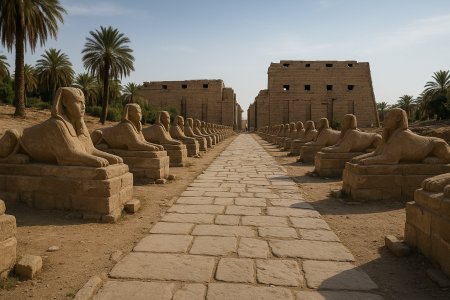
The Avenue of Sphinxes: A Timeless Pathway Through Ancient Thebes
Discover the Avenue of Sphinxes in Luxor, Egypt—a 2.7 km ancient ceremonial road linking Karnak and Luxor Temples. Explore its history, statues, religious significance, and travel tips in this complete guide.
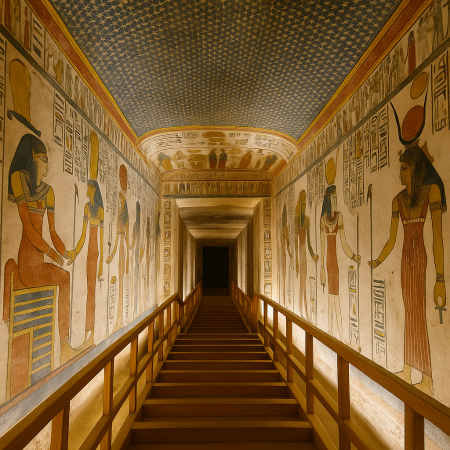
Tomb of Nefertari – A Complete Guide to Egypt’s “Sistine Chapel of Ancient Art”
Explore the Tomb of Nefertari in Luxor’s Valley of the Queens. Learn about its vivid wall paintings, history, architecture, preservation, and visitor tips in this complete guide.

Tomb of Ramses VI: A Masterpiece of Ancient Egyptian Art and Power
Step inside the Tomb of Ramses VI (KV9) in the Valley of the Kings, Luxor. Discover its vivid wall paintings, astronomical ceilings, sarcophagus remains, and why it’s one of Egypt’s most spectacular royal tombs near Karnak Temple, Luxor Temple, and the Temple of Hatshepsut.

The Temple of Seti I: A Journey Through Egypt’s Most Spiritual Monument
Explore the Temple of Seti I in Abydos, Egypt. Discover its mysteries, sacred carvings, and connection to the Valley of the Kings, Karnak Temple, Luxor Temple, and Temple of Hatshepsut.
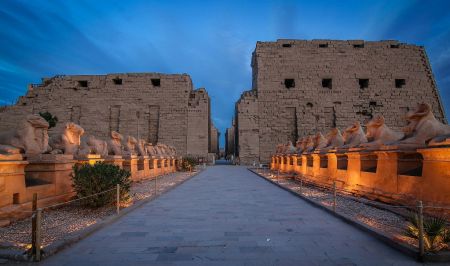
Karnak Temple: The Ancient Wonder of Luxor
Karnak Temple is more than a tourist attraction—it’s a journey through the soul of ancient Egypt.
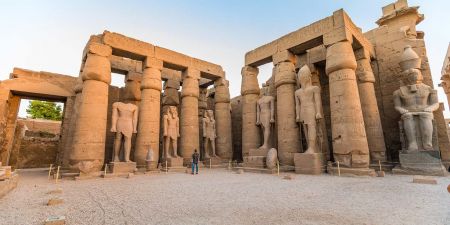
Luxor Temple : The Heartbeat of Ancient Thebes
More than just a relic of ancient glory, Luxor Temple is a powerful symbol of continuity. It's a place where gods met kings, where processions celebrated life, and where stone, story, and spirit intertwined.
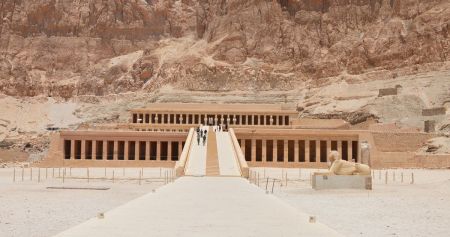
Temple of Hatshepsut
The Temple of Hatshepsut is more than an architectural wonder—it’s a defiant monument to a woman who dared to rule a man’s world.

The Valley of the Kings : Tomb of Pharaohs
The Valley of the Kings is more than a burial ground—it’s a sacred chronicle of ancient Egypt’s vision of the afterlife.

Colossi of Memnon : The Stone Sentinels of Ancient Thebes
The Colossi of Memnon are more than just monumental statues—they are symbols of a civilization that revered its kings as divine, honored art as eternal, and saw death as a passage to a higher realm.
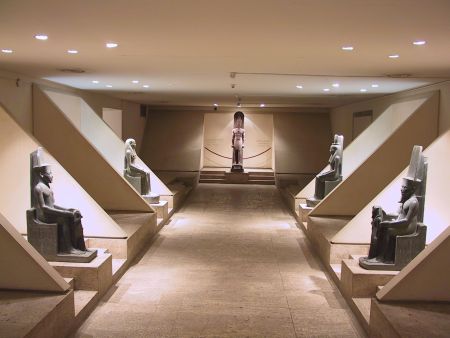
Luxor Museum : Ancient Egyptian Heritage on the Nile’s East Bank
The Luxor Museum distills the essence of Egypt’s imperial splendor into one elegant, unforgettable experience.
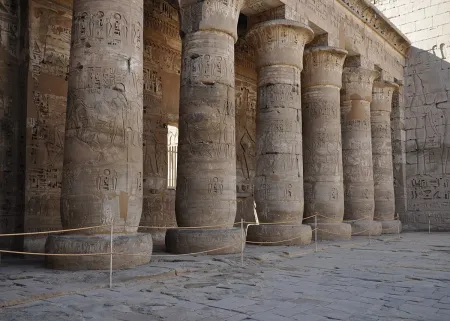
Habu Temple : Egypt’s Pharaonic Power and Artistry
Habu Temple stands as a testament to a great pharaoh, a fading empire, and the enduring splendor of ancient Egyptian civilization.
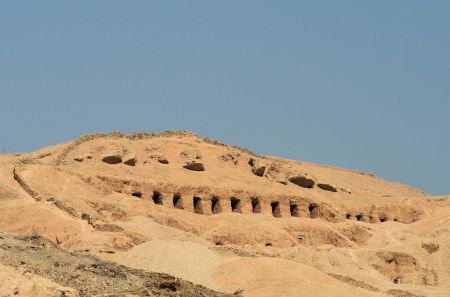
Valley of the Queens:the Eternal Queens of Ancient Egypt
The Valley of the Queens is more than an archaeological site—it’s a tribute to female power, beauty, and eternal life.
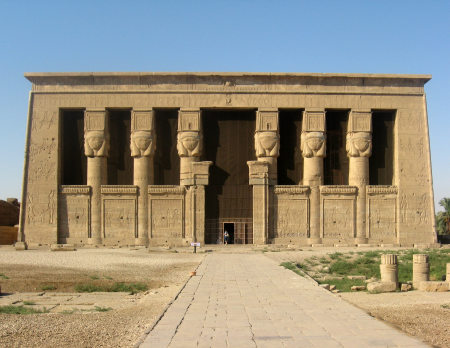
Dandara Temple Complex : The Celestial Sanctuary of Hathor in Upper Egypt
The Dandara Temple Complex is a forgotten jewel that merges myth, astronomy, healing, and beauty into a single monumental experience.
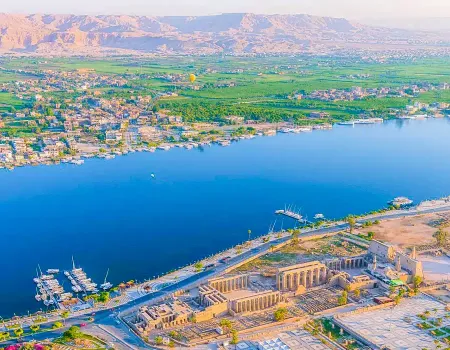
Luxor City : Capital of Ancient Egypt
Luxor City isn’t just a place to visit—it’s a journey through time, etched in stone and brought to life by the Nile’s eternal flow.
Our Partners
Our Awesome Partners